The Cost of This Job
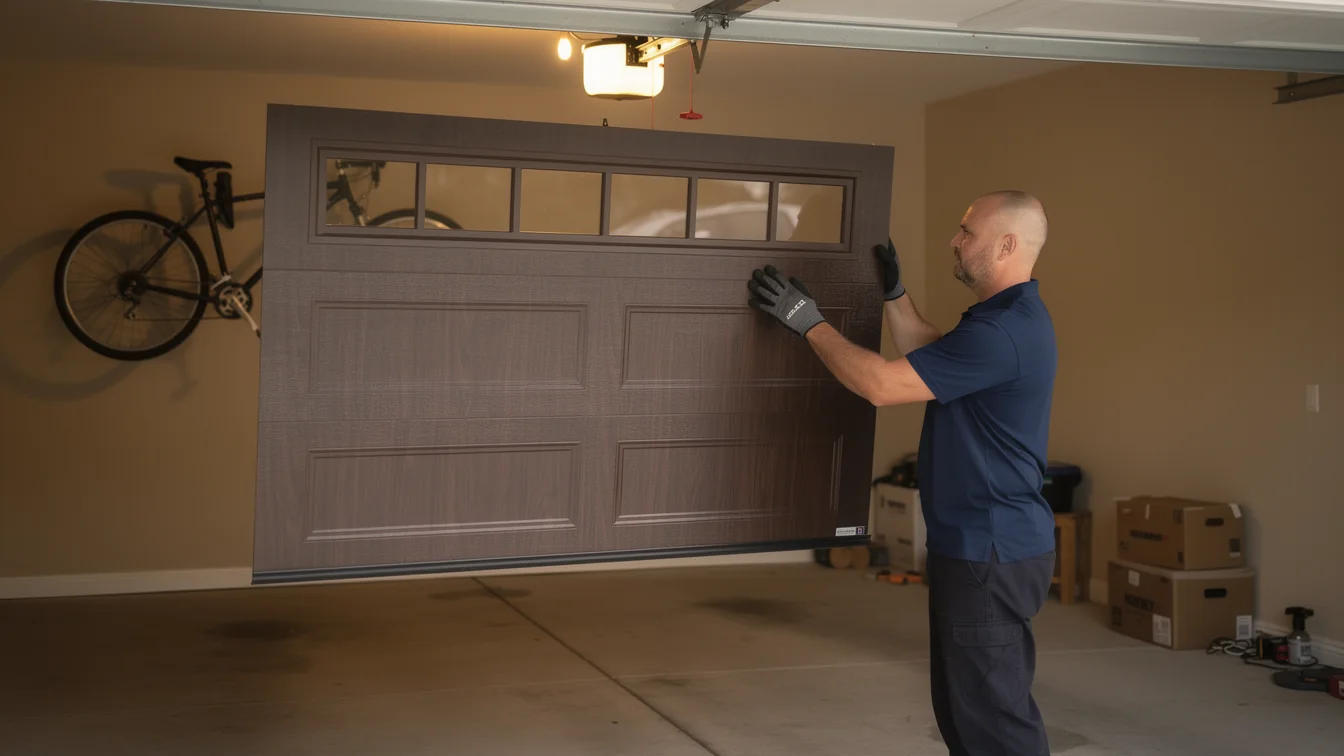
The number that drives most estimates in this town isn't the door itself - it's what's already attached to the opening. A house built in the 1960s or 70s, which is most of Whittier's stock, usually has a single-layer steel or wood panel door on hardware that was never designed with insulation in mind. Swapping that for a modern double-layer insulated door isn't a like-for-like trade. The track spacing, the spring weight calculation, and sometimes the header above the opening all need a second look before a new door goes in.
We can't give you a number here that would hold up across every job - door width, whether the opener survives the swap, and what's hiding behind the old trim all move the price. What we can tell you is that the age bracket matters more than the brand. A 1964-built house (the median year for this area) usually needs more adjustment work at install than a house from 2005 would. If your opener is original to the house, budget for that conversation too - we don't force a 40-year-old opener onto a new door just to save a trip charge.
One honest limit: if the header framing above your opening has sagged or rotted, that's a carpentry job before it's a door job, and we'll say so rather than hang a new door on bad lumber.
The Situation
Whittier's housing runs from 1943 up through 2012, but the median build year is 1964, and the bulk of what's actually on the ground dates to the 1960s and 70s - that pattern repeats across all 86 named areas that make up this part of the San Gabriel Valley. That's the context for almost every service call we take. A door installed when a house was framed in 1964 was built to a code that didn't ask for insulation, didn't ask for a sealed bottom astragal, and often ran on hardware sized for a lighter panel than what's sold today.
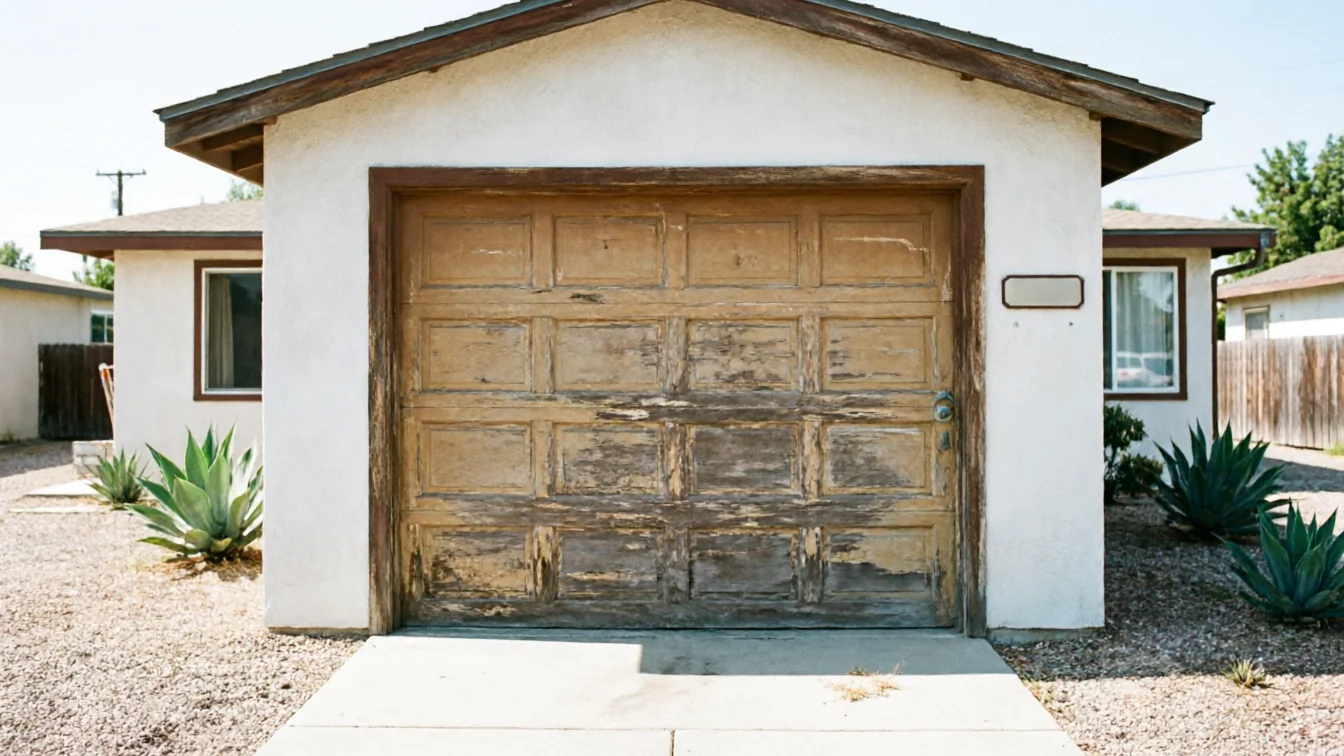
What that means in practice: a lot of doors we open up are original or close to it - one piece or two-piece steel, no foam core, riveted rather than welded joints. These doors aren't unsafe by default, but they're heavier to lift by hand if the spring goes, and they transmit a lot more temperature and noise into an attached garage than anything made in the last fifteen years.
We see this across income levels too - the area's median household income sits at $96,234, which tells you replacement is affordable for most owners here, but a lot of people are simply waiting until the door actually fails rather than upgrading ahead of a breakdown. That's a reasonable call. It's just worth knowing what you're waiting on.
What Changes With the Season
Whittier sits in a mild temperate band, so this isn't a town where a door has to survive repeated freeze-thaw cycling the way it would somewhere colder. Springs here don't see the same stress from ice expansion, and tracks don't fight frost heave under the slab. That's the good news for anyone with an older door.
The flip side is that mild doesn't mean flat. Day-to-night temperature swings still move a steel panel enough to loosen roller brackets over years, and an uninsulated door built before insulation rules existed will pass more of that swing straight into the garage than a foam-core door would. If you keep anything temperature-sensitive in there - paint, electronics, a second fridge - you'll notice the difference between an old single-layer door and a newer insulated one more than you'd notice spring wear.
We don't push insulation retrofits as a seasonal emergency here, because the climate doesn't demand it the way it would in a harsher region. It's a comfort and noise decision for most Whittier houses, not a structural one.
What Local Conditions Do
The same building era shows up whether you're in Whittier proper or out toward South Whittier two miles south, East Whittier three miles east, or La Habra Heights four miles up - this whole stretch filled in during the same postwar decades, so the door problems repeat house to house. We're not set up to work outside this immediate service area, but the pattern holds as far out as Hacienda Heights and Pico Rivera too: older single-layer doors, original hardware, openers that have outlived their rated cycle count.
Across the service area there are 405,393 owner-occupied houses out of 1,076,816 households, and a large share of those houses share this same door profile. That's not a coincidence of one street - it's what happens when a region builds out fast in a twenty-year window and then doesn't touch the garage door again until it breaks.
What that means for you: if your neighbor just replaced theirs, it's worth asking what they found behind the old panel. Odds are good it's close to what's behind yours.
Talk to a local pro
Garage door trouble in Whittier?
Same-day service with honest, upfront quotes.