The Cost of This Job
We can't quote a number here because what drives the bill isn't the visit itself, it's what's behind the door panel when we open it up. In Whittier, most homes went up between 1943 and 2012, with the median build year sitting around 1964, and most of the 86 named areas in this service territory are dominated by 1960s-70s stock. That means a tech is usually pulling parts off a door that's had at least one, sometimes two, replacement cycles already. Original hardware from a 1964 build doesn't match what's on the shelf today, so a chunk of the job is often matching old bracket spacing or an odd-length track rather than just swapping a part.
A call on a newer build, say something from the 1990s or 2000s pocket of that same housing range, is usually faster because the hardware is standard and parts are in stock. A call on an older torsion setup can run longer because the tech is fabricating a fit instead of bolting on a catalog part. We'll tell you which situation you're in before we start, not after.
The Situation
Most calls start the same way: a door that won't open, a door that's loud, or a door that's come off track. What we actually find depends heavily on the age of the house. Whittier's housing stock skews older than a lot of the surrounding San Gabriel Valley communities, and a door installed when the house was built in the 1960s has had decades to work loose at every connection point - hinges, roller brackets, the torsion tube bearing plates.
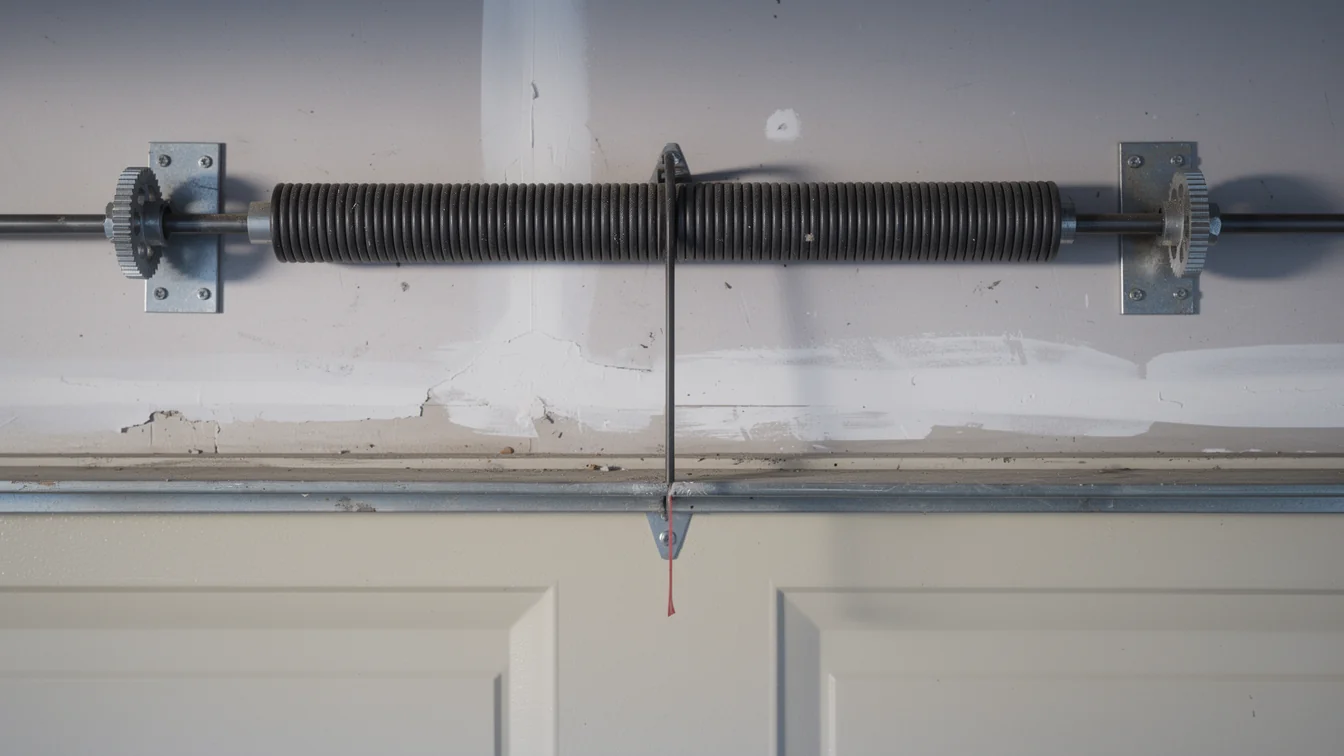
We check the spring first, because a spring that's lost tension makes the opener do work it wasn't built to do, and that's how openers burn out early. Then we check the track alignment, since original 1960s-70s track doesn't always sit square after this many years of seasonal settling. Then the opener itself, if there is one, and whether it's been retrofitted onto original hardware that was never designed for it. This is the honest limitation: if the door and track are original to a mid-1960s build and the frame has shifted, sometimes the right call is replacement, not another repair. We'll say that plainly instead of patching something that'll fail again in six months.
What Changes With the Season
Whittier sits in a mild temperate band, so we don't get the freeze-thaw cycles that crack slab foundations or seize steel track the way colder climates do. That's good news for the door itself - less metal fatigue from extreme cold, less lubricant gumming up on a cold morning. But mild doesn't mean static. Temperature swings between a warm afternoon and a cooler evening still make steel track and aluminum panel expand and contract, just over a smaller range than you'd see inland or at elevation.
What we actually see shift seasonally here is humidity and dust load rather than ice. Dry stretches pull moisture out of nylon rollers and rubber seals, which is when we get more calls about a door that's suddenly noisy after months of running fine. Because the climate doesn't force an aggressive seasonal maintenance schedule the way harsher regions do, a lot of Whittier doors get neglected until something actually breaks, which ties back to why so many service calls here involve a spring or roller that's well past due rather than a emergency weather failure.
What Local Conditions Do
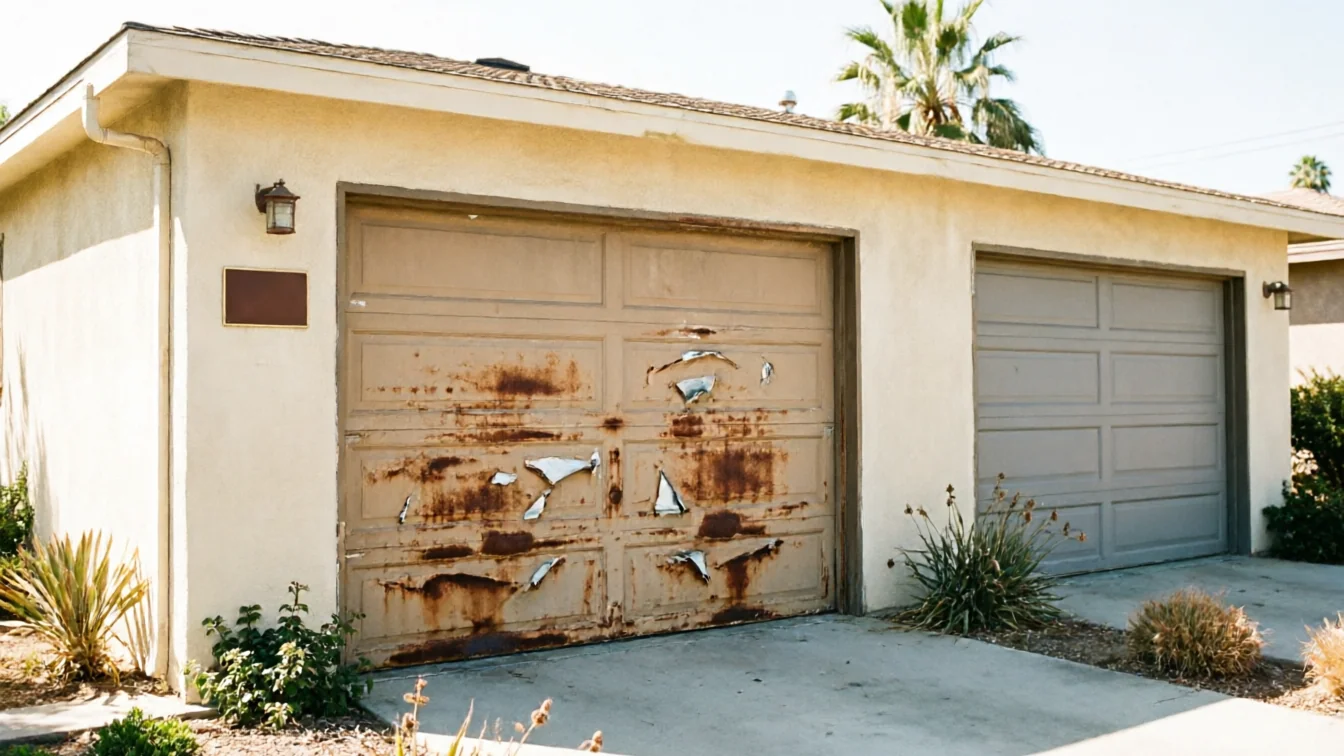
The conditions in Whittier don't beat up a garage door the way salt air or deep freeze would elsewhere. What they do is slower and less obvious: steady wear on original hardware that's been in place since a home's 1960s-70s construction, with no major climate event ever forcing an early replacement. That's exactly why so many of the doors we open up are original to the house, or close to it, still running first-generation torsion springs or early opener units that have simply outlasted their expected service life without ever qualifying as an obvious emergency repair.
Across the wider service area, with over 1,076,816 households and roughly 405,393 owner-occupied houses, and a median household income near $96,234, most of what we see are owners who maintain rather than replace, which tracks with the housing age. A door that's 50-plus years old and still functioning isn't rare here - it's close to typical. The job, more often than not, is bringing that door up to a safe, properly tensioned condition rather than tearing it out.
Talk to a local pro
Garage door trouble in Whittier?
Same-day service with honest, upfront quotes.