The Cost of This Job
We're not going to quote you a number here, because the honest answer is it depends on what's actually wrong, and we won't know that until a tech has the door open and the spring off the drum. What we can tell you is what drives the decision in this area. Whittier's median household income sits at $96,234 across the service region, and at that level a lot of owners here choose to replace a tired opener outright rather than keep buying belts and gears for a unit that's already fifteen years into its life. The other driver is the housing stock itself - a 1964-median-year house usually still has its original torsion hardware, and once a spring that old lets go, the drums, bearings, and cable are often worn enough that fixing just the spring means a callback in a year. A tech will tell you plainly whether you're looking at a repair or whether replacement is the better use of your money. That's a limitation we're upfront about: we don't pad a small job into a big one, but we also won't sell you a patch job if the rest of the hardware is on its way out.
The Situation
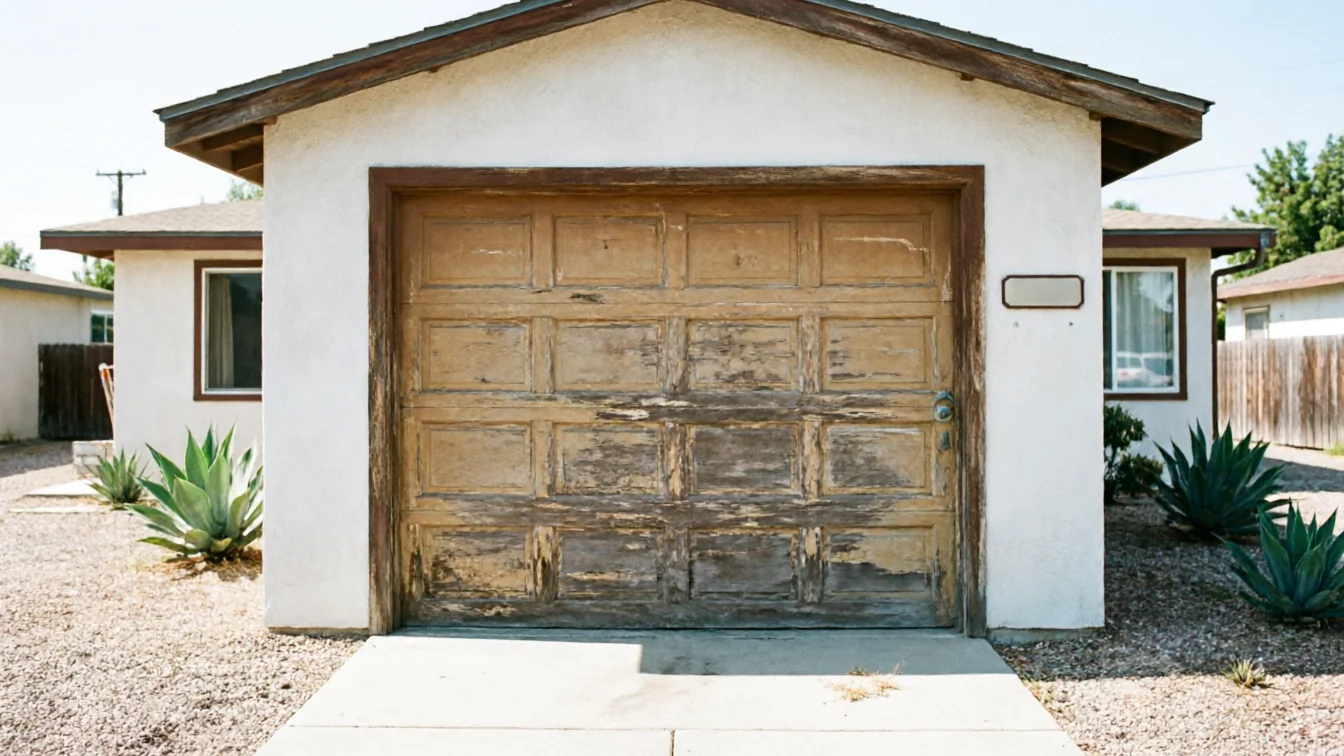
Houses in this service area were built anywhere from 1943 to 2012, but the median lands at 1964, and the dominant stock across the 86 named communities we cover is 1960s and 70s construction. That matters for a garage door call because it tells a technician what's behind the panel before he even opens the toolbox. A house from that era typically has a single torsion spring on a side mount, steel panels thinner than what's installed today, and rollers that were never upgraded to nylon. Newer infill and remodels exist too - some houses here were built as late as 2012 - so a tech still checks the nameplate and spring wind rather than assuming. With 405,393 owner-occupied houses among 1,076,816 households across the region, there's a lot of variation block to block, even within a few miles. What's consistent is that original equipment, when it's still in the garage, is now sixty years old in some cases, and parts for it simply aren't stocked anywhere.
What Changes With the Season
This area sits in a mild temperate climate band, which means we don't see the freeze-thaw swings that crack concrete aprons or seize tracks solid in colder parts of the country. That's good news for door hardware generally - springs here fail from cycle fatigue and age, not from ice locking a track overnight. But mild doesn't mean static. Coastal moisture and temperature swings through the year still work on exposed steel, especially on original 1960s-era hardware that was never galvanized to today's standard. A tech checks for surface rust on springs and hinges even when there's been no obvious weather event, because the slow creep of corrosion in a mild climate is easy to miss until a spring snaps with no warning. We also watch for sun exposure on south- and west-facing doors, which can warp thinner panels from the 60s and 70s stock faster than it would a heavier modern door. None of this is dramatic weather - it's just steady wear that adds up over decades in a climate that never forces a hard reset.
What Local Conditions Do
Put the housing age and the climate together and you get a specific failure pattern, not a generic one. A tech working a call in this service area expects original torsion springs on houses from the 1960s core years, thinner steel panels than current code calls for, and roller and track hardware that's never been touched since installation. He's not expecting ice damage or wind-driven debris damage, because the mild temperate band doesn't produce those here. What he is expecting is fatigue: springs rated for a cycle count that's long since been exceeded, openers from an earlier generation with worn gears, and cables showing fray at the drum from decades of the same stress point. The spread of nearby communities - South Whittier two miles off, Hacienda Heights and East Whittier at three, La Habra Heights four - run the same general building era, so a tech coming from one job to the next across this area sees the same hardware story repeat itself, just with different house numbers on the door.
Talk to a local pro
Garage door trouble in Whittier?
Same-day service with honest, upfront quotes.