The Cost of This Job
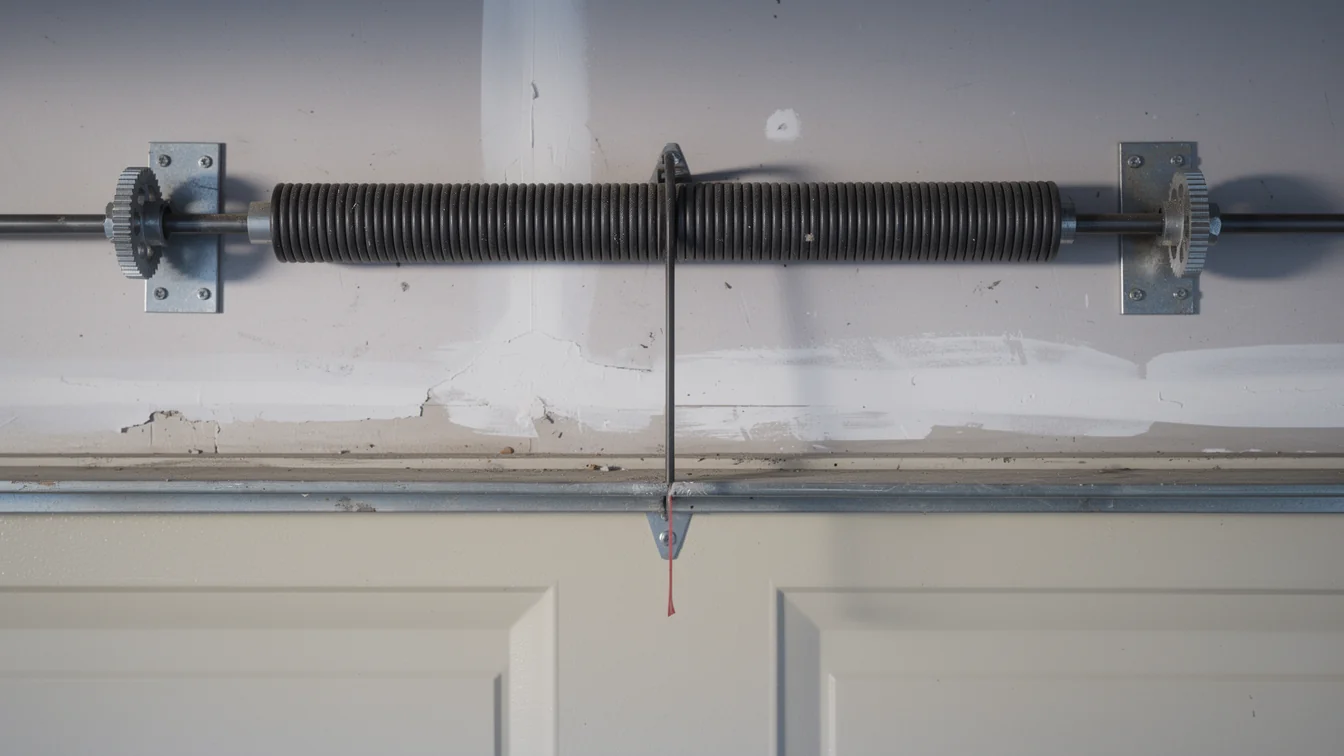
We can't quote you a number here without seeing the door, and we won't pretend otherwise. What we can tell you is what drives the decision in this area specifically. A lot of Whittier houses were built between 1943 and 2012, with the median landing around 1964, and most of the stock across the 86 named areas we work in dates to the 1960s and 70s. That means a huge share of the doors we open up still have original or near-original hardware: single-piece torsion springs, steel rollers without nylon bushings, and track hung on brackets that haven't been updated since the house was framed.
When a job is a spring swap or a cable replacement, repair almost always wins. When we're looking at an original door panel from that era paired with a dead opener and bent track, the labor to fix each piece separately starts to add up past what a new door and opener cost installed together. We'll tell you straight when we see that math, rather than stack repairs on a door that's circling the drain. The one thing we won't do is guess a price before we've seen the panel and the track in person.
The Situation
Most of the repair calls we get in Whittier aren't storm damage or accident damage. They're fatigue. A torsion spring rated for a certain number of cycles on a house built in 1964 has had sixty years to use those cycles up, and nobody's replaced it since. Same with the rollers and the hinges connecting panel to panel on an original steel or wood door from that era.
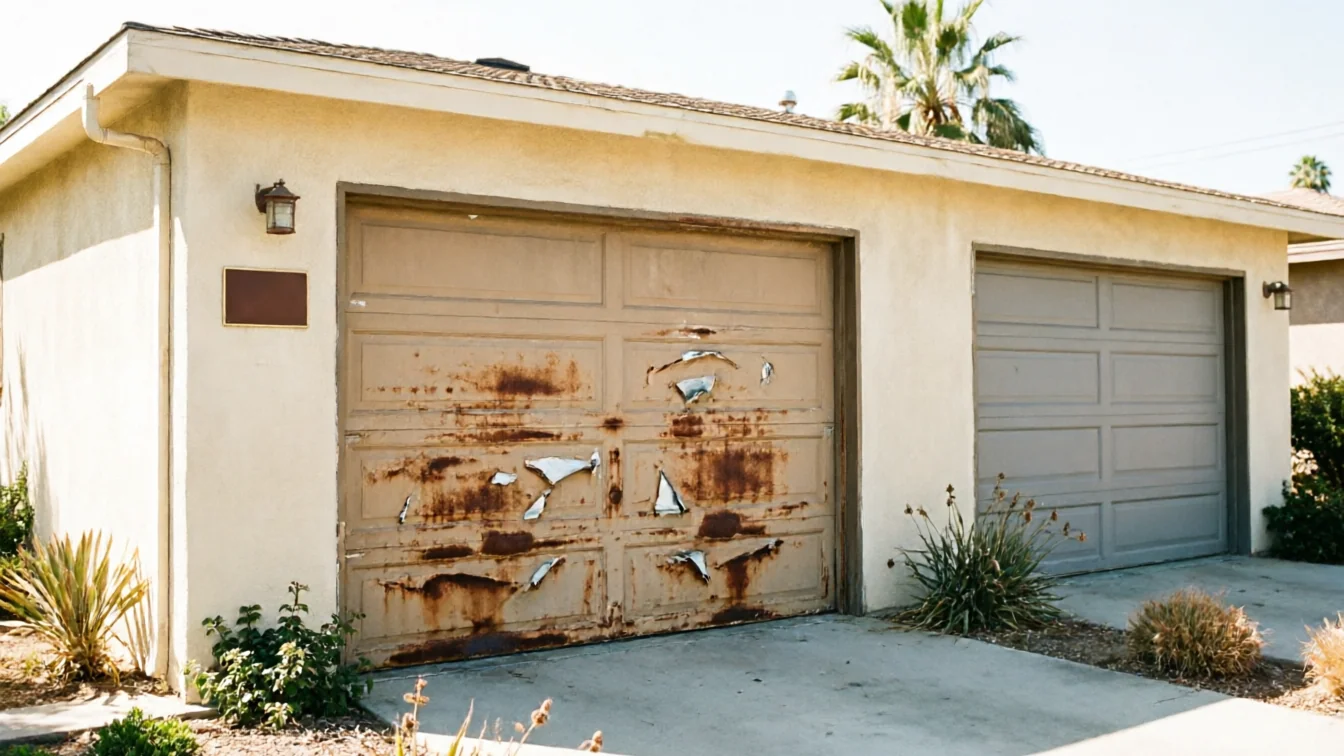
The question isn't whether the door is old. In this area, old is normal. The question is whether what's failing is one part or the whole system. A broken spring on a door with solid panels and straight track is a repair, full stop. A door where the bottom panel has rusted through at the corners, the opener is original to the house, and the track is bent from decades of a slightly-off alignment is a different conversation. At that point you're not fixing a door, you're patching a chain of worn parts that will keep failing one at a time. We'll walk you through which one you're looking at before we start any work.
What Changes With the Season
Whittier sits in a mild temperate band, and that actually works in your favor compared to places that swing between hard freezes and heat. We don't see the kind of seasonal expansion and contraction that cracks panels or snaps springs on a predictable yearly cycle. That's part of why so many original 1960s and 70s doors in this area are still hanging on at all.
What the mild climate doesn't fix is time. A door doesn't need a freeze-thaw cycle to wear out a torsion spring or pit a roller; it just needs enough open-and-close cycles over enough decades. So the seasonal pattern here is less about weather damage and more about use. Summer tends to bring more cycles per day as people are in and out of the garage, and that's usually when a spring that's been weakening for years finally lets go. It's not the season breaking the door. It's the season putting the last cycle on a part that was already near the end.
What Local Conditions Do
With median household income across the area at $96,234 and roughly 405,393 owner-occupied houses out of 1,076,816 households total, a lot of the homes we're called to are owned, not rented, which changes the calculus. An owner weighing repair against replacement is usually thinking about how long they plan to stay in the house, not just the invoice in front of them.
The mild climate here means we're not fighting rust-through from salt air or warped panels from freeze cycles the way some regions are. What we are fighting is straightforward mechanical age on houses with a median build year of 1964. When a door's springs, rollers, and opener are all original and all failing around the same time, repairing one component usually just moves the next failure a few months down the line. That's the point where we start talking replacement instead of another service call.
Talk to a local pro
Garage door trouble in Whittier?
Same-day service with honest, upfront quotes.