The Cost of This Job
We don't have a price list to hand you here, and we're not going to make one up. What we can tell you is how the decision usually breaks down on the houses we see around Whittier. A lot of this city's housing went up between 1943 and 2012, with the median build year sitting around 1964, and most of it clustered in the 1960s and 70s across the 86 named areas that make up this town. That matters because a door from that era is almost never a standalone repair - the track, the hinges, and the spring anchor are all the same age, and fixing one piece often exposes the next failure. If the opener and the springs are both original to a house built in the mid-60s, you're not weighing a repair against a repair. You're weighing a patch job against a full swap, and the patch job rarely holds for long. We'll tell you straight when a single part fix makes sense and when it doesn't, instead of running up a bill on a door that's circling the drain.
The Situation
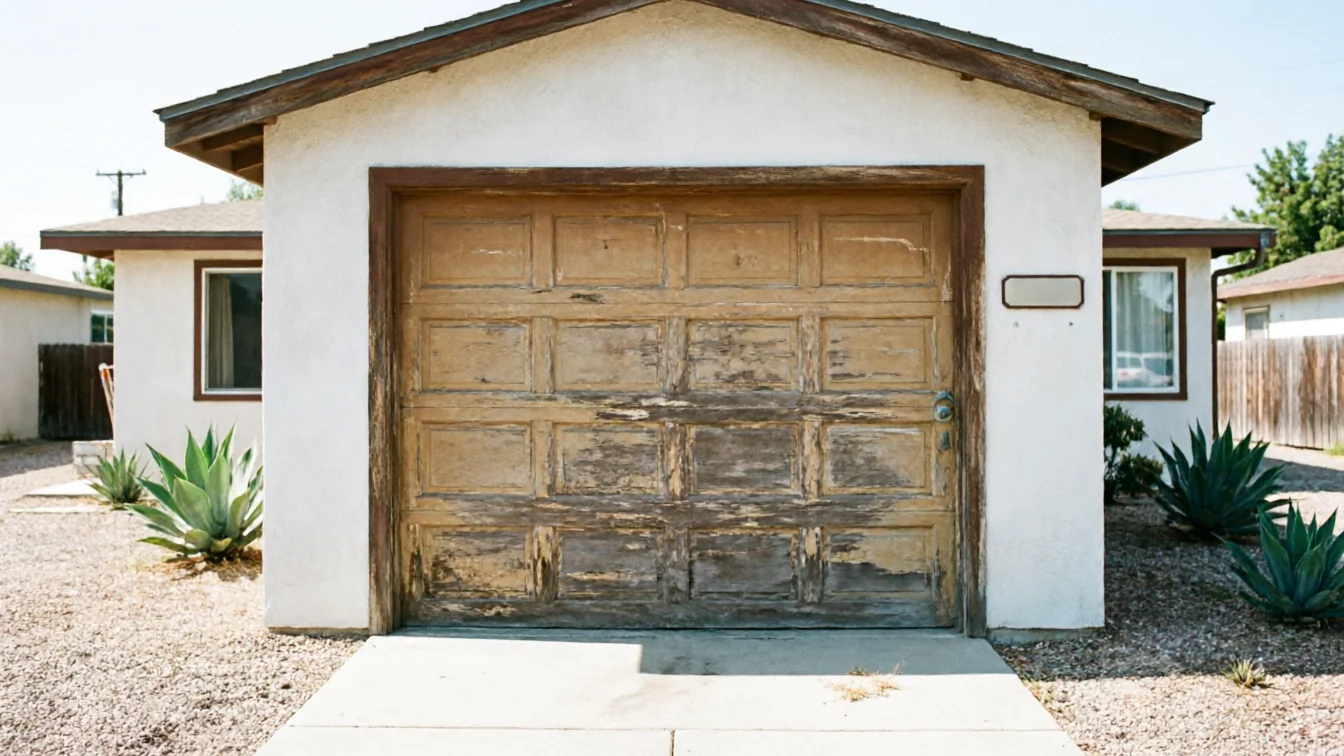
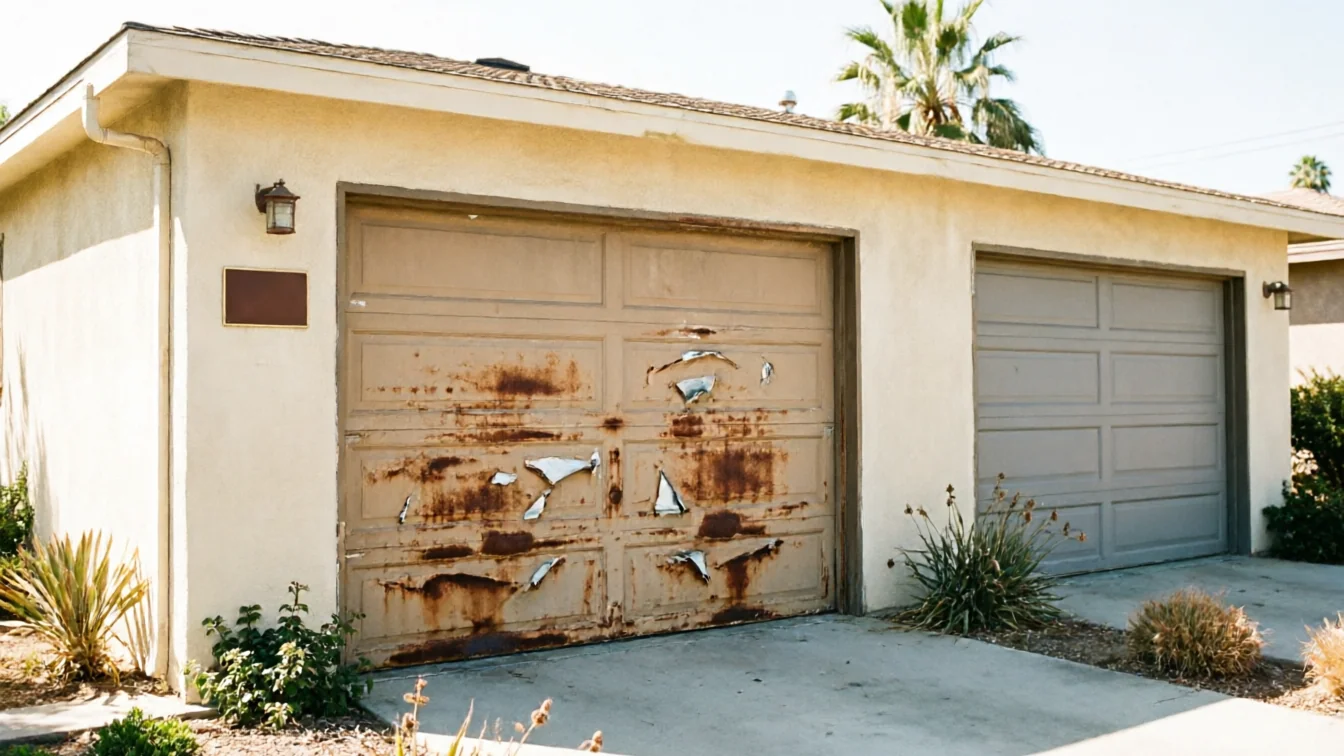
Walk a few blocks in the older sections of Whittier and you'll see the pattern: single-car and two-car doors installed when the tract was built, mostly steel or wood panel, on hardware that was standard for a 1960s or 70s build. Nobody's making replacement parts for some of that original gear anymore, which is the real reason a repair quote on an older door sometimes runs close to a new door's cost. The frame and track mounts themselves have usually held up fine - this isn't earthquake country talk, it's just that the moving parts wear out long before the structure around them does. So the real question isn't age by itself. It's whether the opening is still square, whether the track is original or already swapped once, and whether the panel is cracked or just cosmetically tired. A door that's merely ugly is worth fixing almost every time. A door that's racked in the frame usually isn't.
What Changes With the Season
Whittier sits in a mild temperate band, so we don't get the freeze-thaw cycles that wreck springs and openers in colder parts of the country. That's good news for an older door - the hardware ages slower here than it would somewhere with hard winters, which is part of why doors from the 60s and 70s are still running at all. But mild doesn't mean static. Temperature swings between a hot afternoon and a cool evening still make steel panels expand and contract, and on an older door that's already lost some of its factory tension, that daily flex is what finally snaps a worn spring or pulls a loose hinge the rest of the way out. We see more of these failures as the weather shifts through the year, not because the climate is harsh, but because it's steady enough to let a weak part limp along right up until it doesn't.
What Local Conditions Do
Across this service area there are 1,076,816 households, and 405,393 of those are owner-occupied houses - a lot of them sitting on the same original garage door they got when the place was built. With a median household income of $96,234 in the area, most owners here can choose between a careful repair and a full replacement without either one being a stretch, which changes the conversation. We're not going to tell every homeowner with a 1964-era door to replace it. Plenty of those doors are mechanically sound and just need a spring, a roller set, or a new bottom seal. But if the door has been patched twice already, or the panel's warped enough that it binds in the track, sinking more money into it is usually just delaying the same decision. Honest answer, every time: we tell you which one you're looking at before we touch a wrench.
Talk to a local pro
Garage door trouble in Whittier?
Same-day service with honest, upfront quotes.