The Cost of This Job
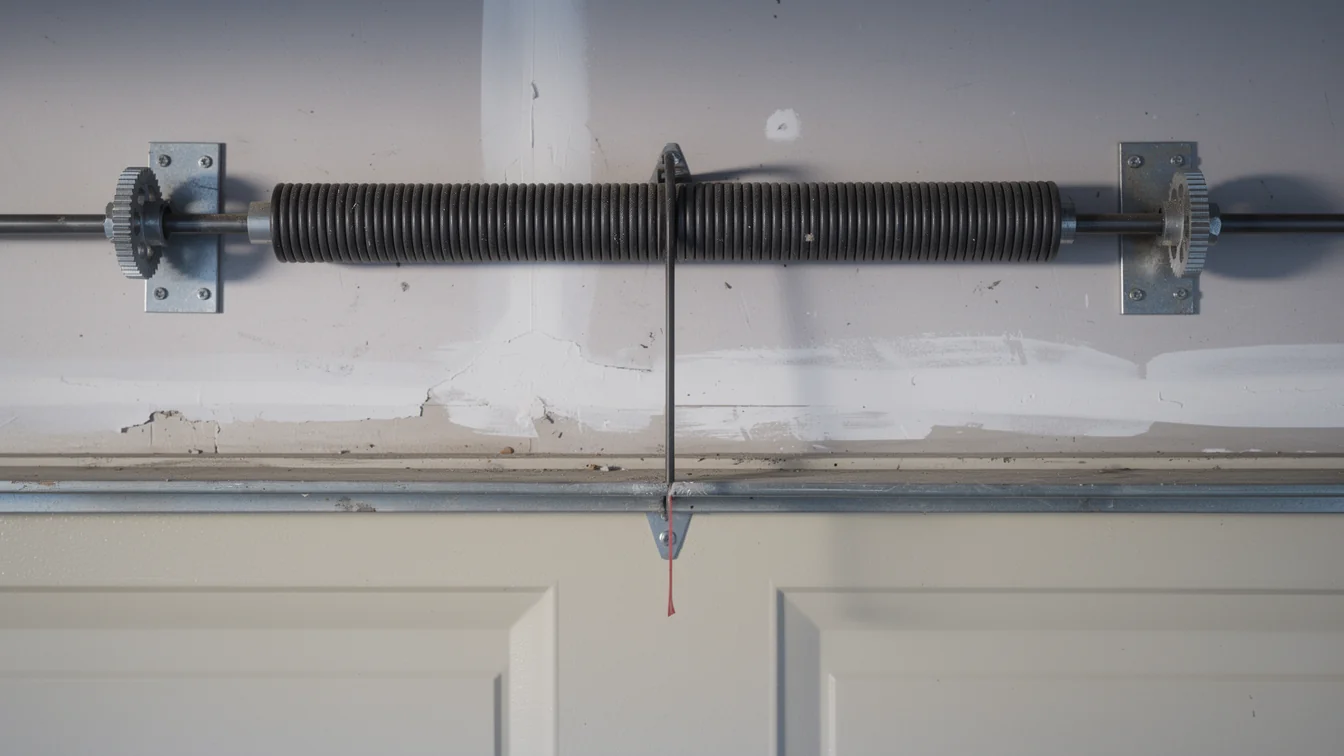
We don't have a flat number to hand you here, because an off-track door can mean three different repairs. Sometimes it's a bent roller bracket you can bend back in twenty minutes. Sometimes a cable jumped the drum and the door is sitting crooked in the opening, which is a bigger job and not safe to force back yourself. And sometimes the track itself is bowed from being hit by a car bumper, which means new track, not just a realignment. The honest answer is we have to look at it before we quote it, because guessing a price over the phone on a door we haven't seen is how you end up with a surprise invoice. One thing worth saying plainly: if the door is original to a house built in the early 1960s and the track is rusted through at the mounting brackets, patching it is a short-term fix. At some point replacing the track and the rollers together costs less than three callbacks for the same problem. We'll tell you when you've hit that point instead of billing you three times to find out.(/)
The Situation
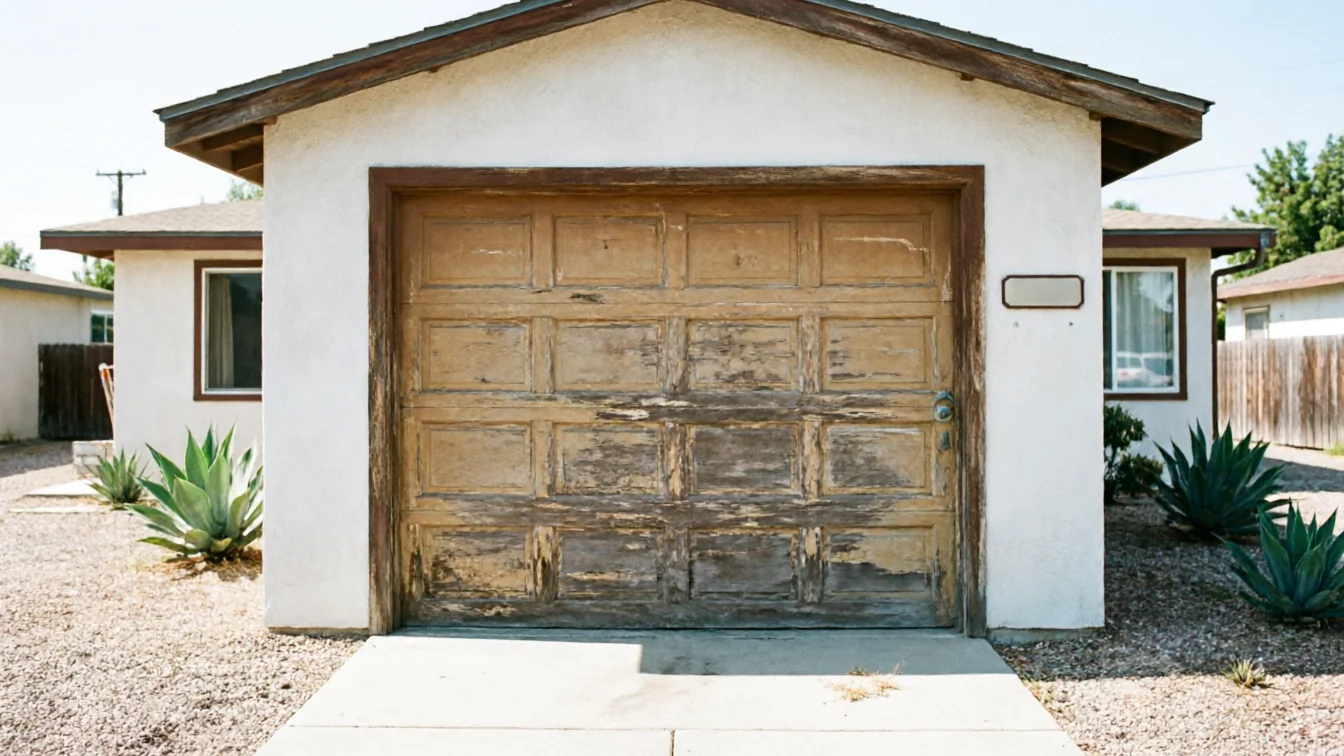
Whittier's housing stock runs from 1943 up through 2012, but the median build year sits at 1964, and most of the 86 named areas in this part of the San Gabriel Valley filled in during the 1960s and 70s. That matters for off-track doors specifically, because track brackets from that era were often nailed into the door jamb rather than lag-bolted, and fifty-plus years of the door's own weight working against a handful of nails is exactly how a bracket pulls loose. Once one bracket lets go, the track twists out of plumb on that side, and the rollers start riding the edge of the rail instead of the center. You'll hear it before you see it, usually a grinding or a hard knock partway through the cycle, followed by the door hanging crooked. On a lot of these older setups the vertical track is also narrower than what's used today, so a roller that's worn even slightly oversized will pop out of a track that's not forgiving of play. It's not that these houses were built badly. It's that garage door hardware from 1964 was never meant to run for sixty years without the brackets being re-set at least once.(/)
What Changes With the Season
Whittier sits in a mild temperate band, so you're not dealing with hard freeze-thaw that heaves a slab and throws a track out of square the way it does in colder parts of the country. That's the good news. The slower-moving issue is thermal cycling on metal that's decades old: tracks and brackets expand and contract a small amount every day, and over fifty years that tiny daily movement works fasteners loose even without any dramatic weather event. Because the climate here doesn't force people to think about their garage door twice a year the way snow country does, a lot of these loosening brackets go unnoticed until the door actually jumps the rail. There's no storm season here that's going to announce the problem for you. That means the usual sign is quieter: a track bracket you can wiggle by hand, a door that closes slightly off-square, or rollers that look polished shiny on one side from riding the rail edge instead of running centered.(/)
What Local Conditions Do
With 405,393 owner-occupied houses across this service area and most of them dating to that same 1960s and 70s building wave, the pattern we see on off-track calls repeats block to block. It's rarely a dramatic cause like a car hitting the door. More often it's a slow accumulation: a bracket that's been loose for a year, a roller that's worn thin, a cable that's starting to fray at the drum, and the door finally gives at the weakest point. None of that shows up as an emergency until the day the door won't travel straight. The fix usually isn't exotic - re-set the bracket, swap the worn rollers, true up the track - but it needs doing by someone who can tell the difference between a bracket that needs re-anchoring and a track that needs full replacement. Guess wrong on that call and you're paying for the repair twice.(/)
Talk to a local pro
Garage door trouble in Whittier?
Same-day service with honest, upfront quotes.