
Quieter grinding or blinking
Sometimes it's quieter - a grinding instead of a whir, a light that blinks instead of staying solid, a remote that worked yesterday and doesn't today. What the symptom doesn't tell you is the cause.
Whittier, CA
Opener repair for Whittier homes built mostly in the 1960s and 70s, where original wiring and worn gears are the most common reason the door won't open.
The repair
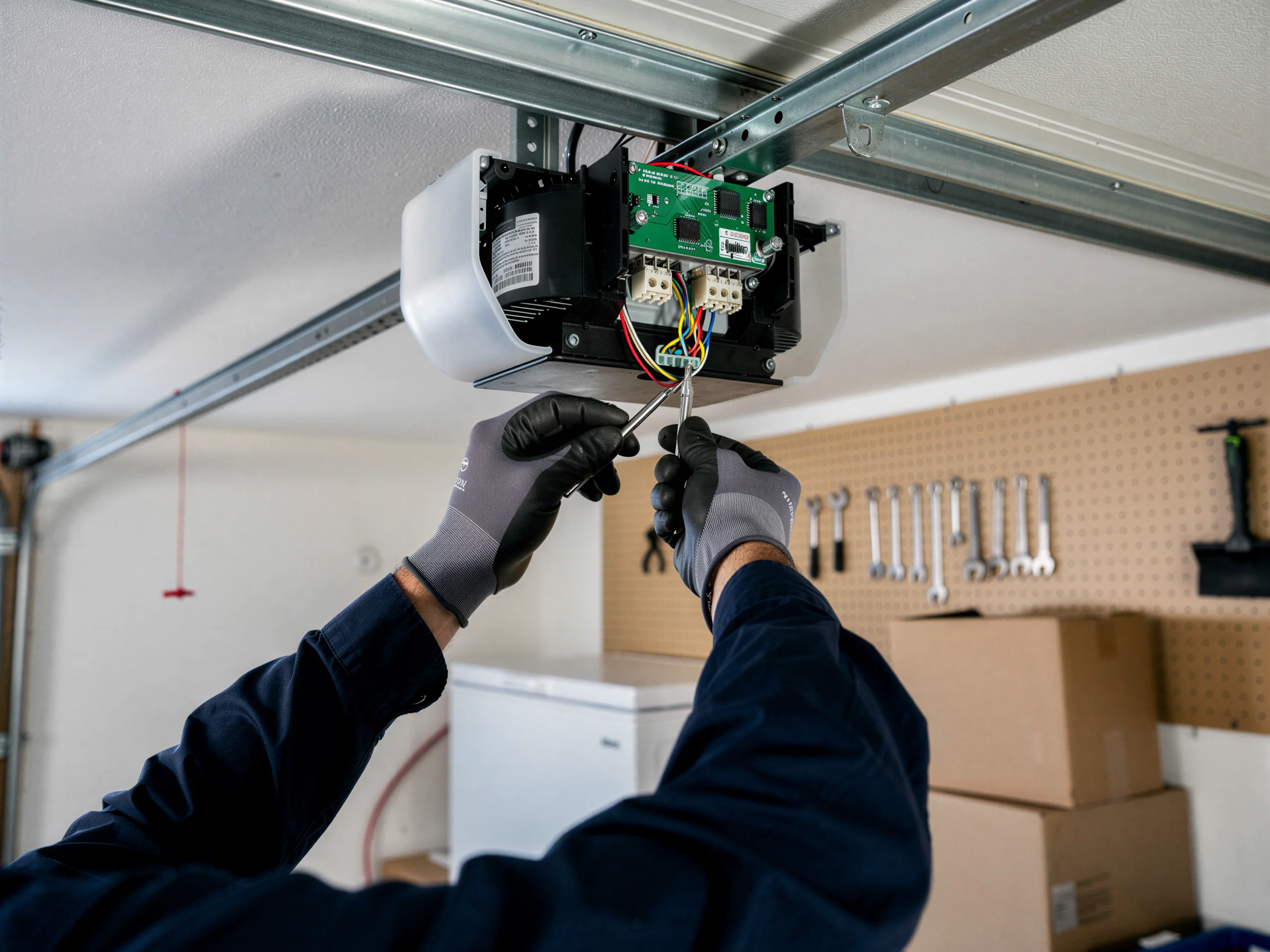
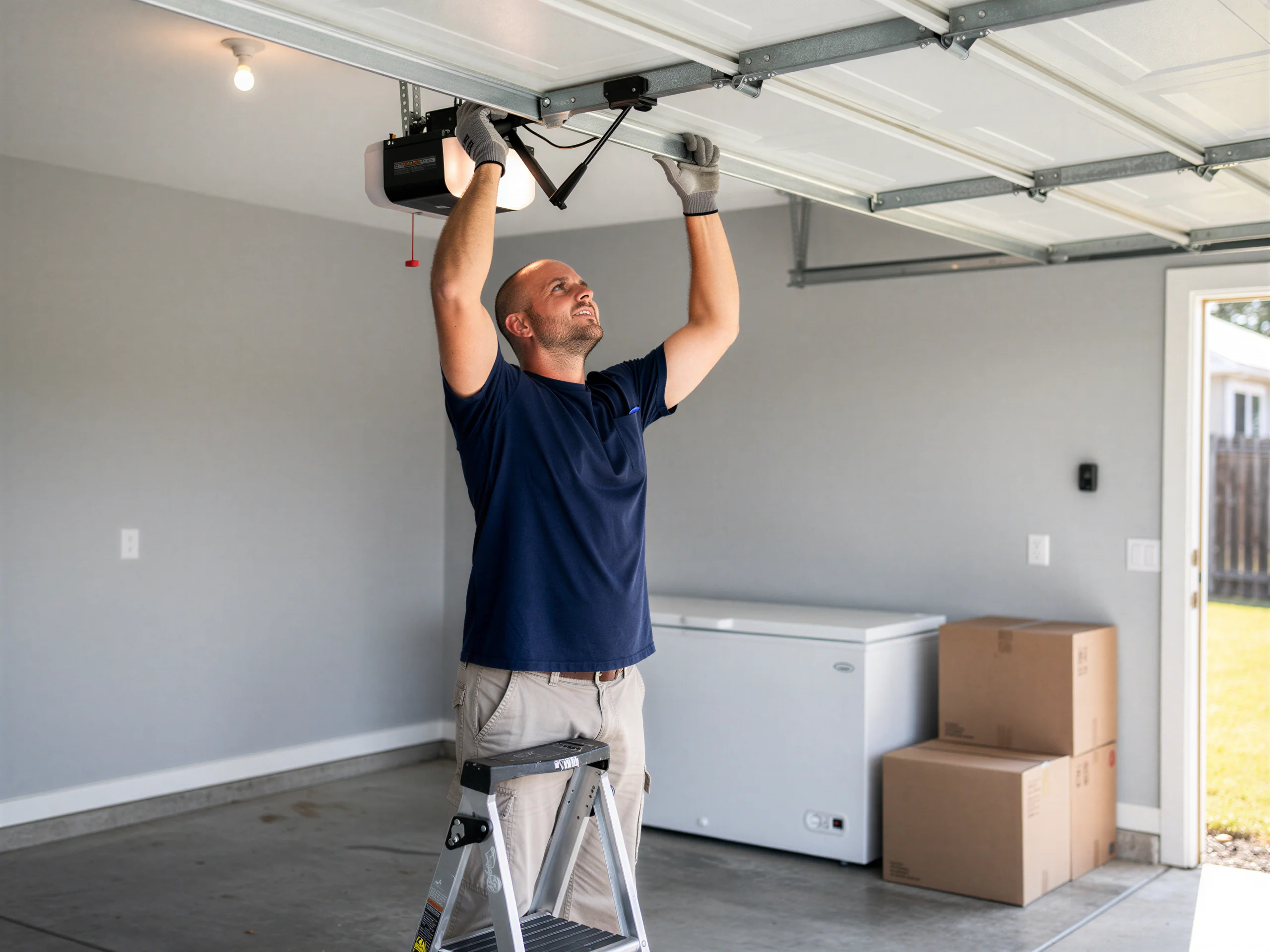
Most opener calls in Whittier come down to one of four things: a stripped drive gear, a burnt-out capacitor on the motor, a logic board that's lost its mind, or a safety sensor that's drifted out of alignment.
We start by running the opener through its cycle, listening for the motor to hum without the carriage moving - that's almost always the gear - and checking the sensors at the base of the track, since a misaligned eye will stop a door cold and most owners never think to check it.
For homes built in the 1960s and 70s, which covers most of the housing stock in this service area, the opener itself is often a second- or third-generation replacement bolted onto original track and header hardware. That mismatch matters - a modern opener forcing against an old, slightly sagging header can burn out a drive gear in half the time it should take.
We check the header and track alignment as part of any opener call, not just the unit itself. We don't replace a board or motor assembly on the spot without diagnosing first. Swapping parts and hoping is how a $40 fix turns into a $300 one, and we'd rather tell you it's a sensor than sell you a new opener you didn't need.
Symptoms
The call usually starts the same way: the door won't open, or it opens partway and reverses, or the opener makes its normal sound but nothing on the door moves.
Sometimes it's quieter - a grinding instead of a whir, a light that blinks instead of staying solid, a remote that worked yesterday and doesn't today. What the symptom doesn't tell you is the cause.
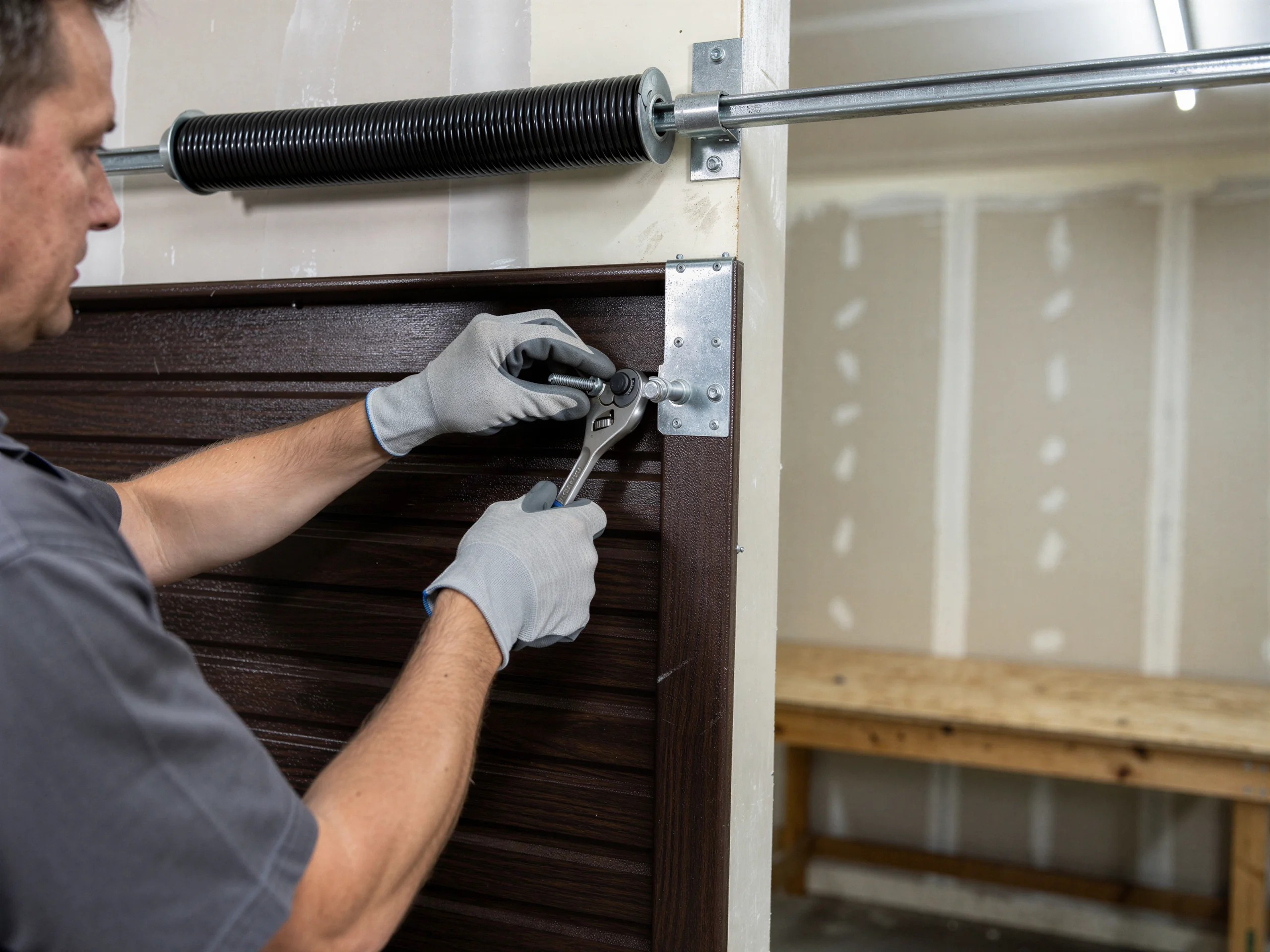
A door that reverses partway up can be a sensor, a limit setting, or a spring that's lost enough tension that the opener thinks something's blocking it - which is a spring problem wearing an opener costume.
We see this often enough in Whittier's older housing that we check spring tension before we touch the opener logic, because fixing the board on a door with a weak spring just means the board fails again in a few months under the same strain.
Local causes
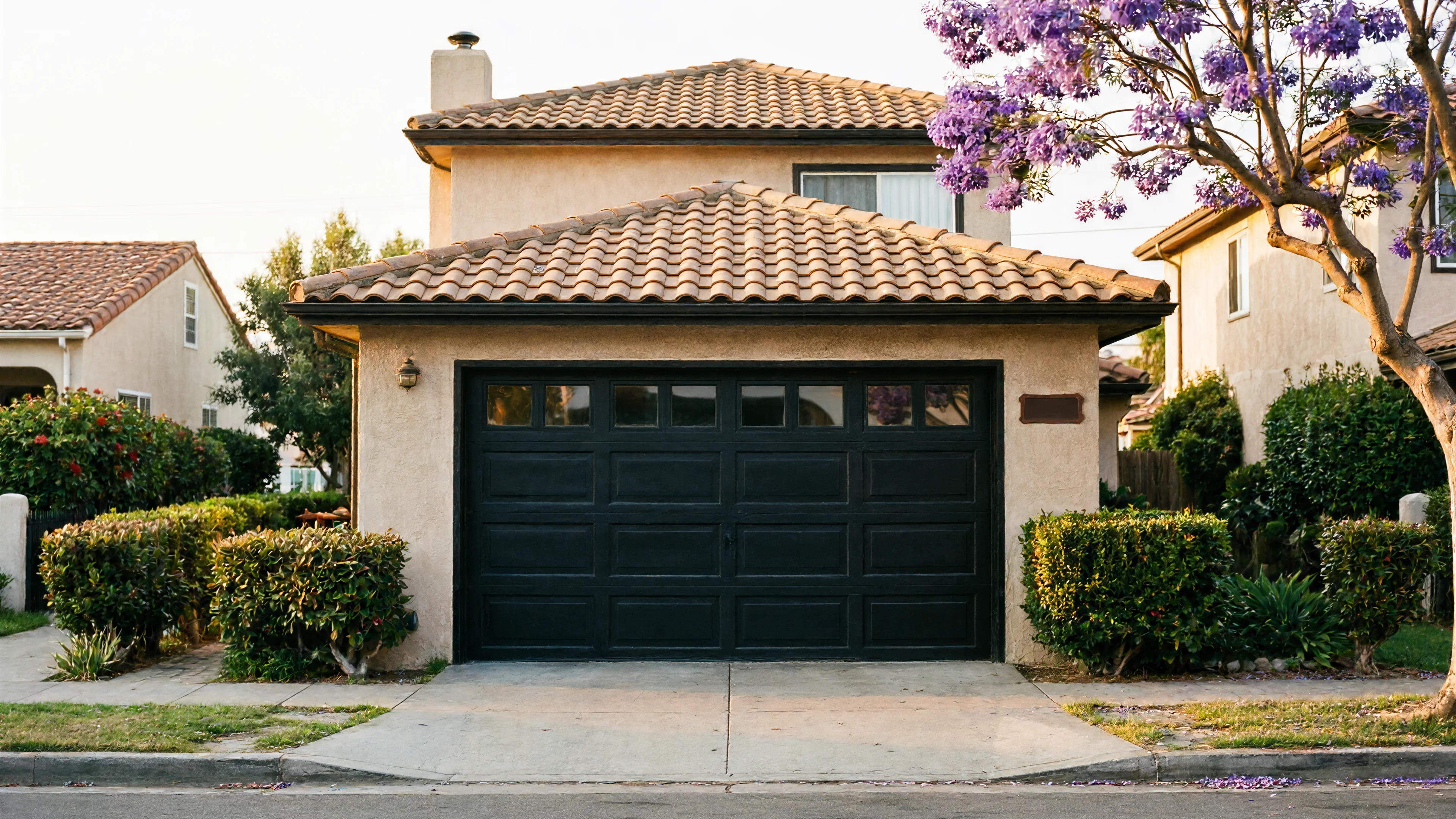
Whittier's housing stock runs older than a lot of surrounding cities - built mostly between 1943 and 2012, with the bulk of it going up in the 1960s and 70s. That means a large share of openers in this area are not original to the house; they're replacements installed on decades-old track, header framing, and in some cases the original spring system. The opener works harder than it was designed to when the rest of the hardware around it has aged past its own service life.
The mild temperate climate here is actually a point in your favor compared to areas with real freeze-thaw cycles or heavy humidity swings - it's not the weather wrecking the gears. The failure pattern we see is mechanical fatigue from age and mismatch, not corrosion or weather damage. That's a different diagnosis than what a shop in a harsher climate would give you, and it's why we check the hardware around the opener before we blame the opener itself.
On the truck
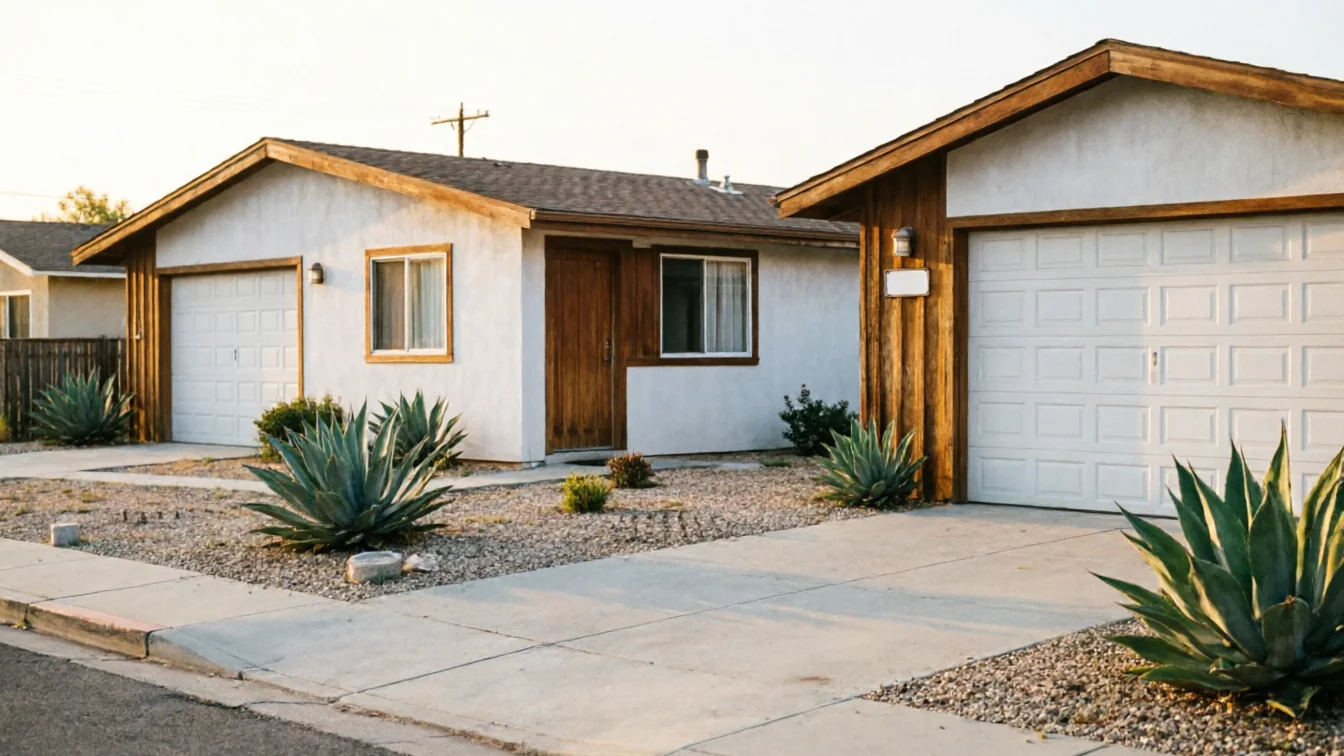
We carry the drive gears, capacitors, and sensor kits that fit the opener models most common across this service area's older housing stock - the parts that fail from age and use, not from a single bad part run. If your opener is a newer model with a less common board, that part may need to be ordered, and we'll tell you that up front rather than string you along with a vague timeline.
Across the roughly 405,393 owner-occupied houses in the broader service area, the opener brands and vintages repeat enough that stocking the common failure parts saves a second trip for most calls. What we don't stock is every proprietary board for every opener ever made - if yours is one of the rare ones, we'll say so and give you a real timeline instead of guessing.
Questions
Usually a stripped drive gear inside the opener housing - the motor still runs, but it's no longer connected to the chain or belt pulling the door. It's a common failure on openers that have been running for years on original track and header hardware, which describes a lot of houses in this area.
If the door reverses partway or the opener strains and groans before it moves, check the spring first. A weak spring makes the opener do the lifting work the spring used to handle, and that overload is often misdiagnosed as an opener failure when the opener is actually fine.
We stock gears, capacitors, and sensor kits for the opener models most common in this area's older housing stock. Rare or discontinued boards sometimes need to be special-ordered - we'll tell you that at diagnosis, not after you've waited a week for a part that isn't coming.
Explore more
Ready when you are
Whittier Garage Door Pros repairs and installs garage doors, springs and openers in Whittier, CA and the surrounding area.