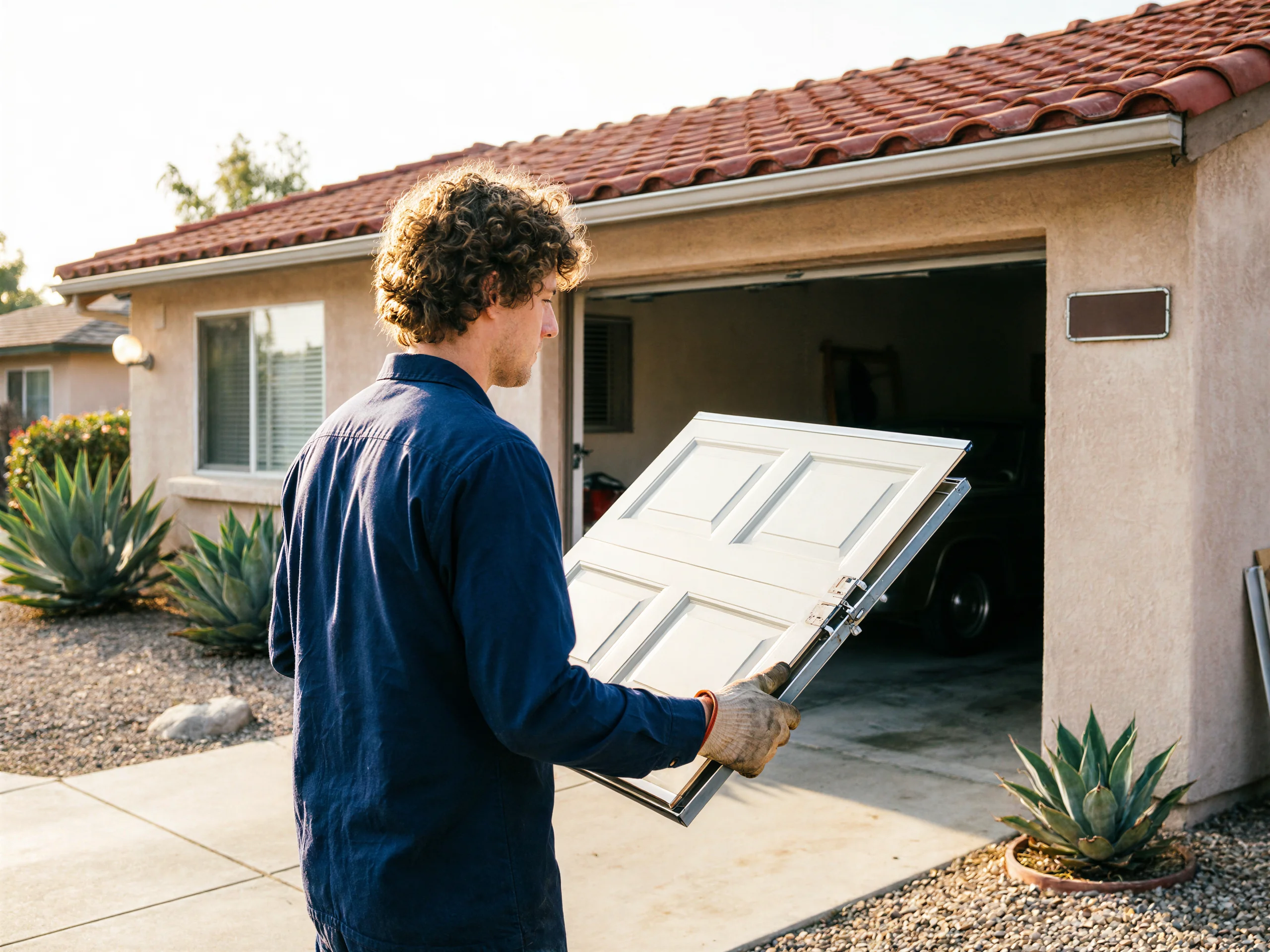
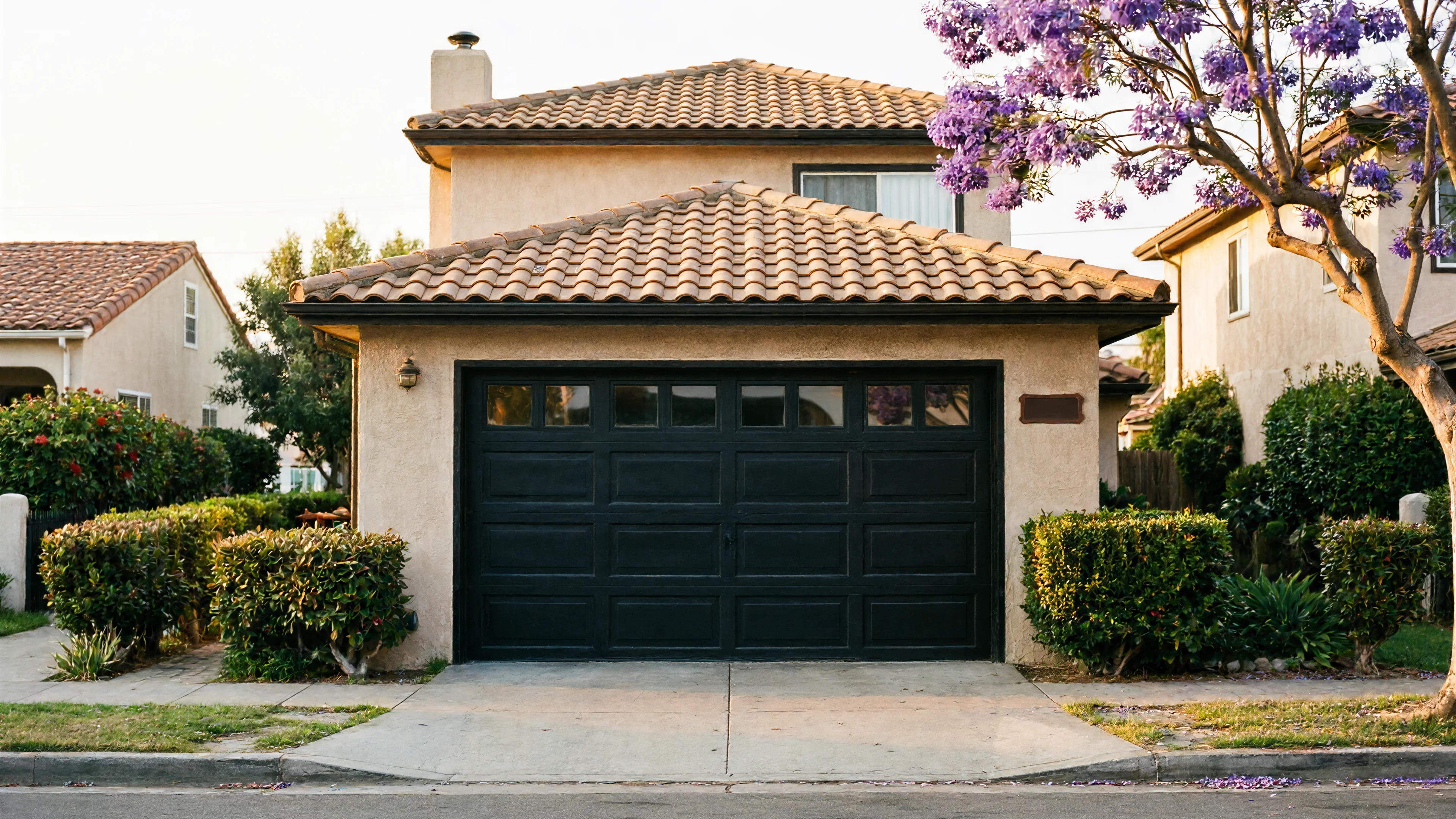
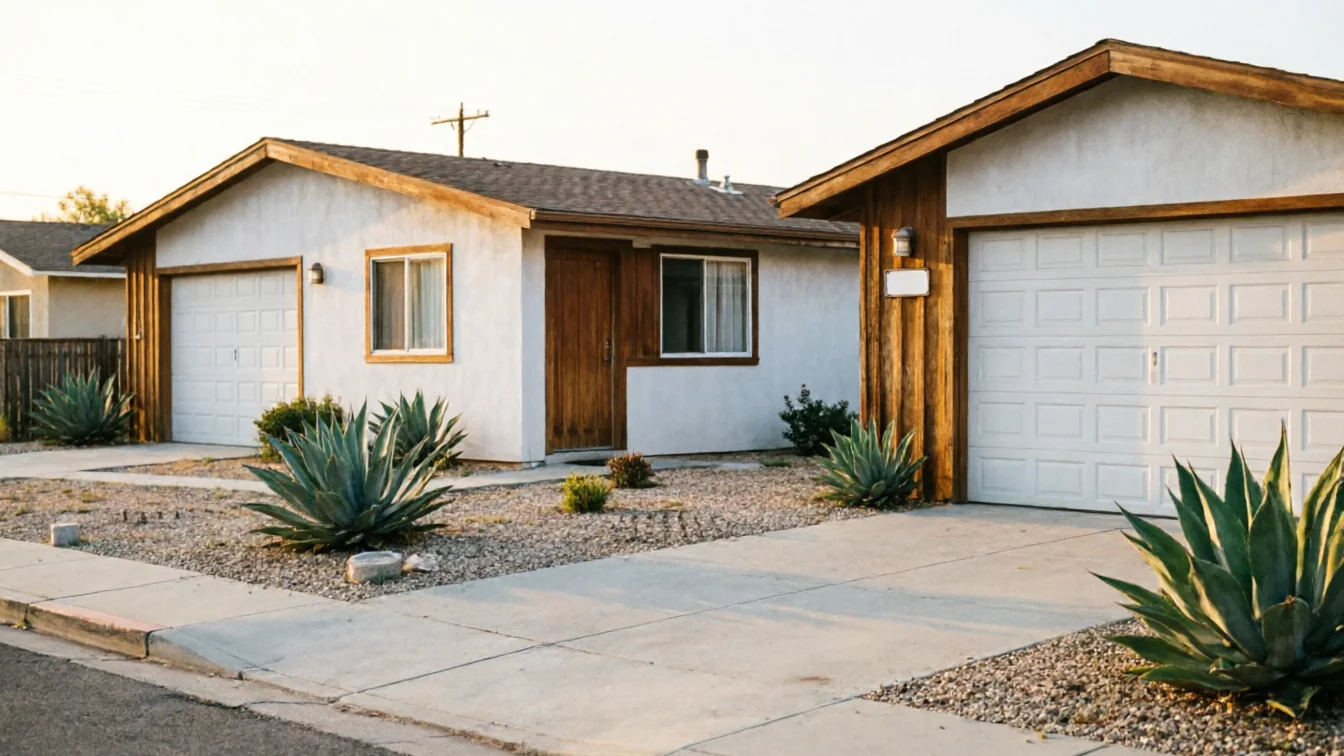
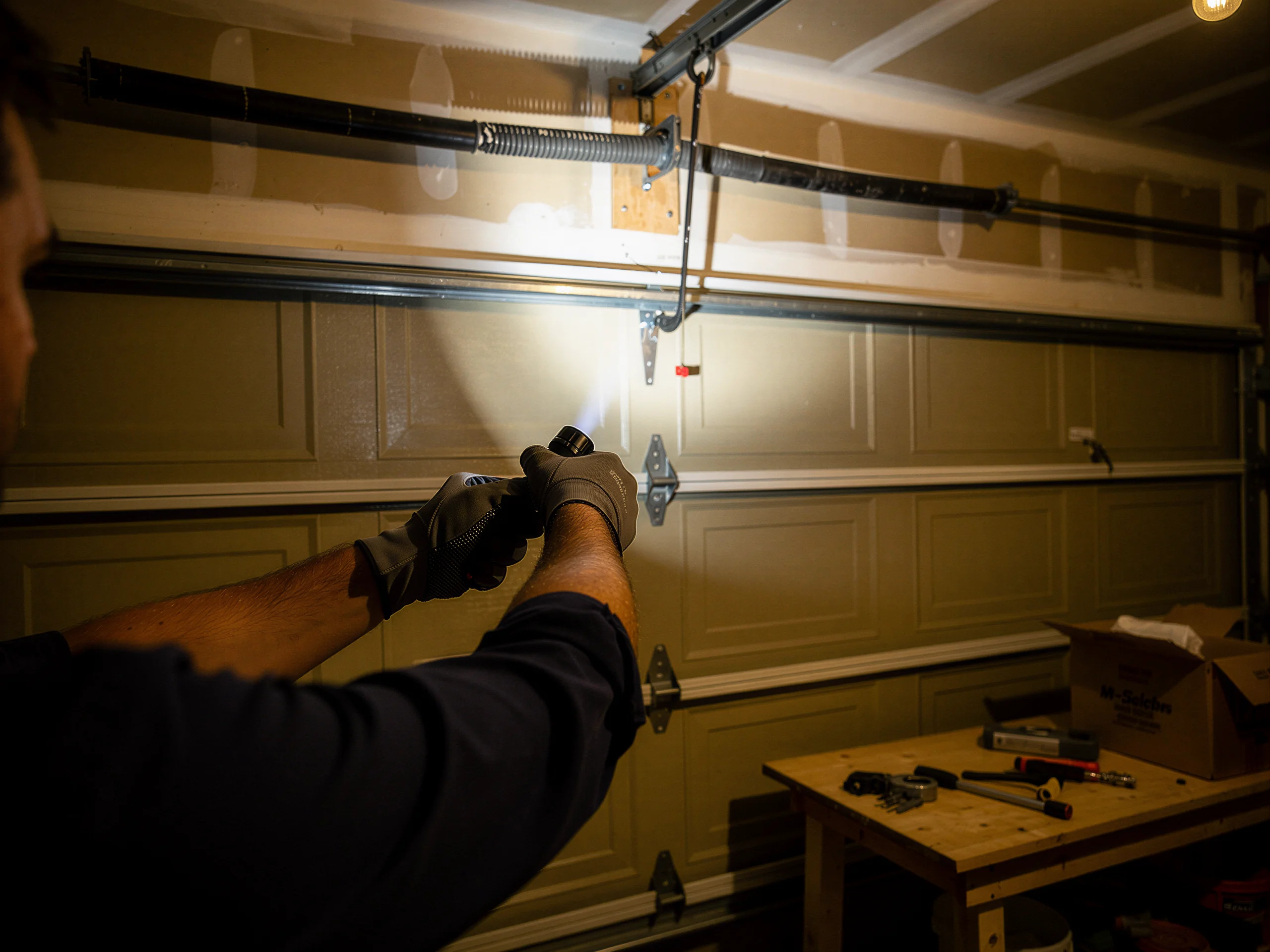
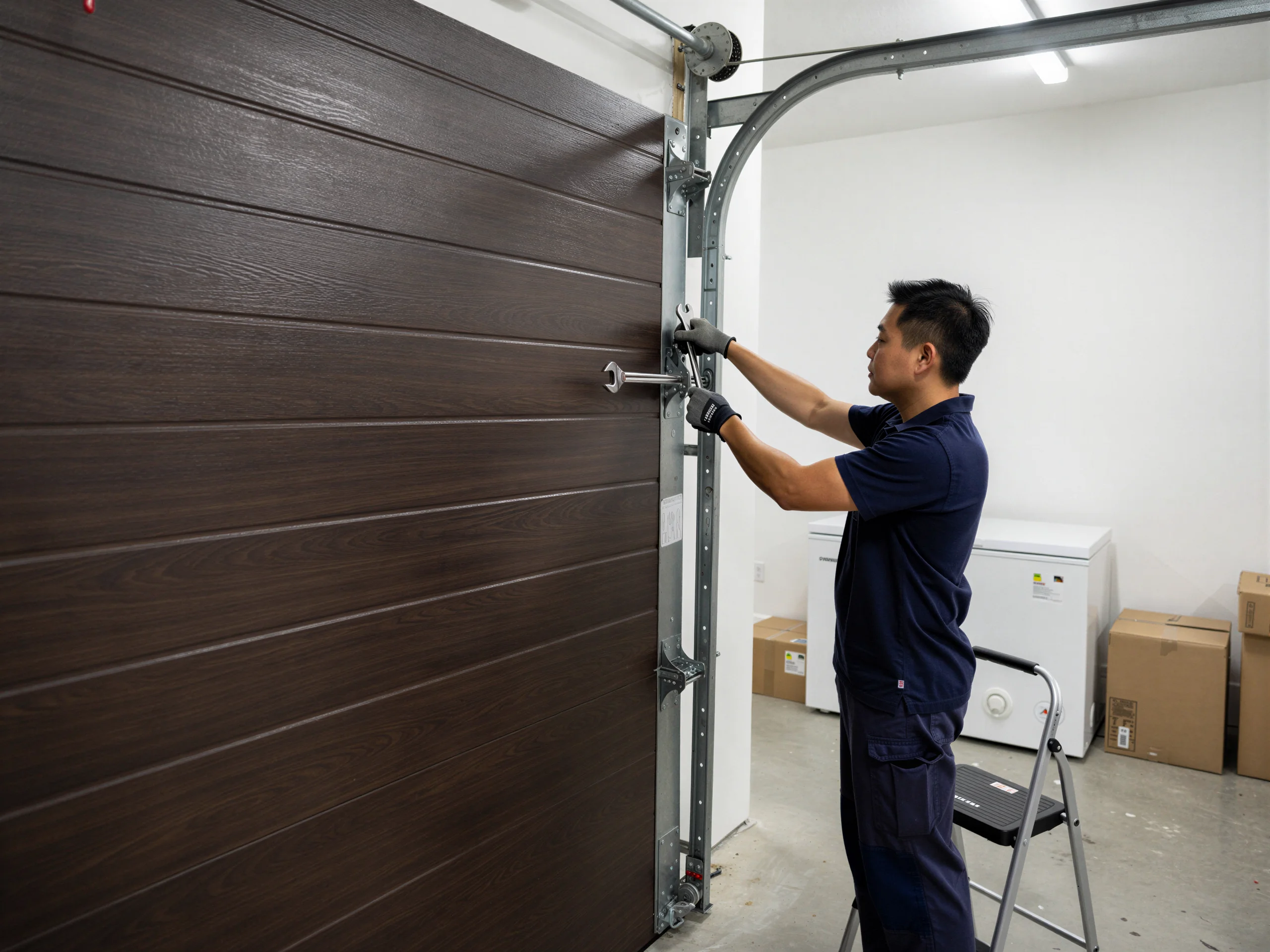
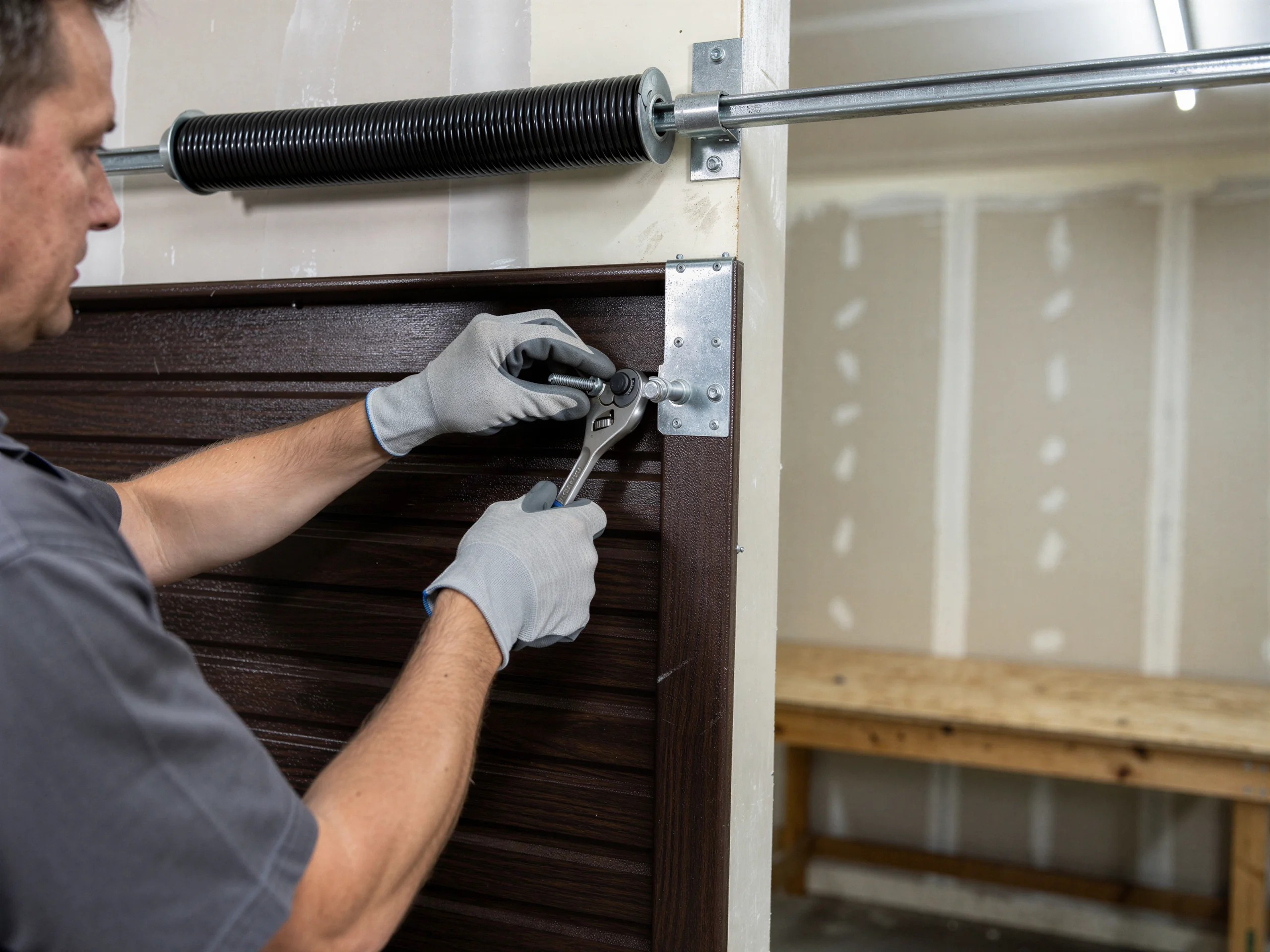
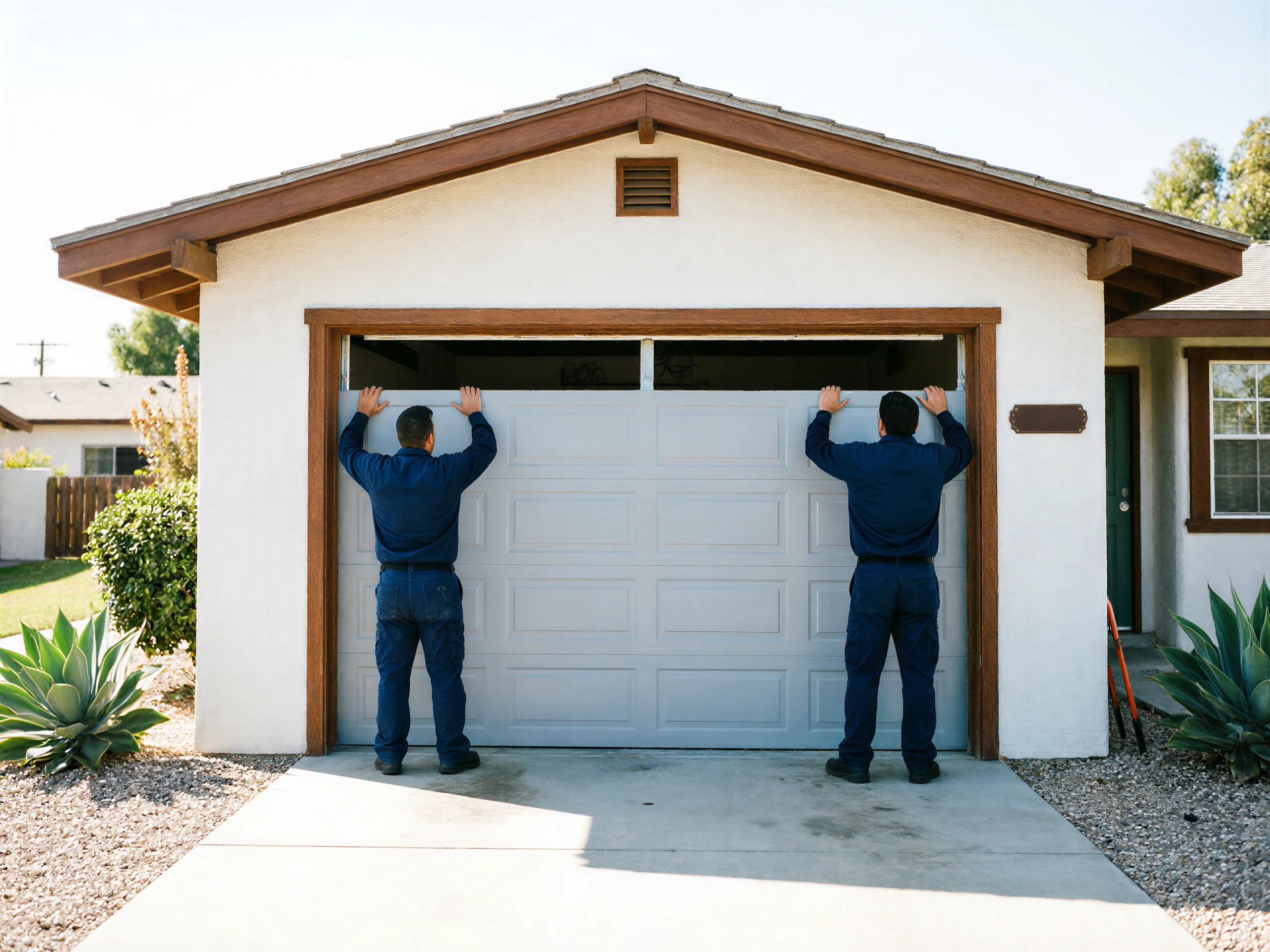
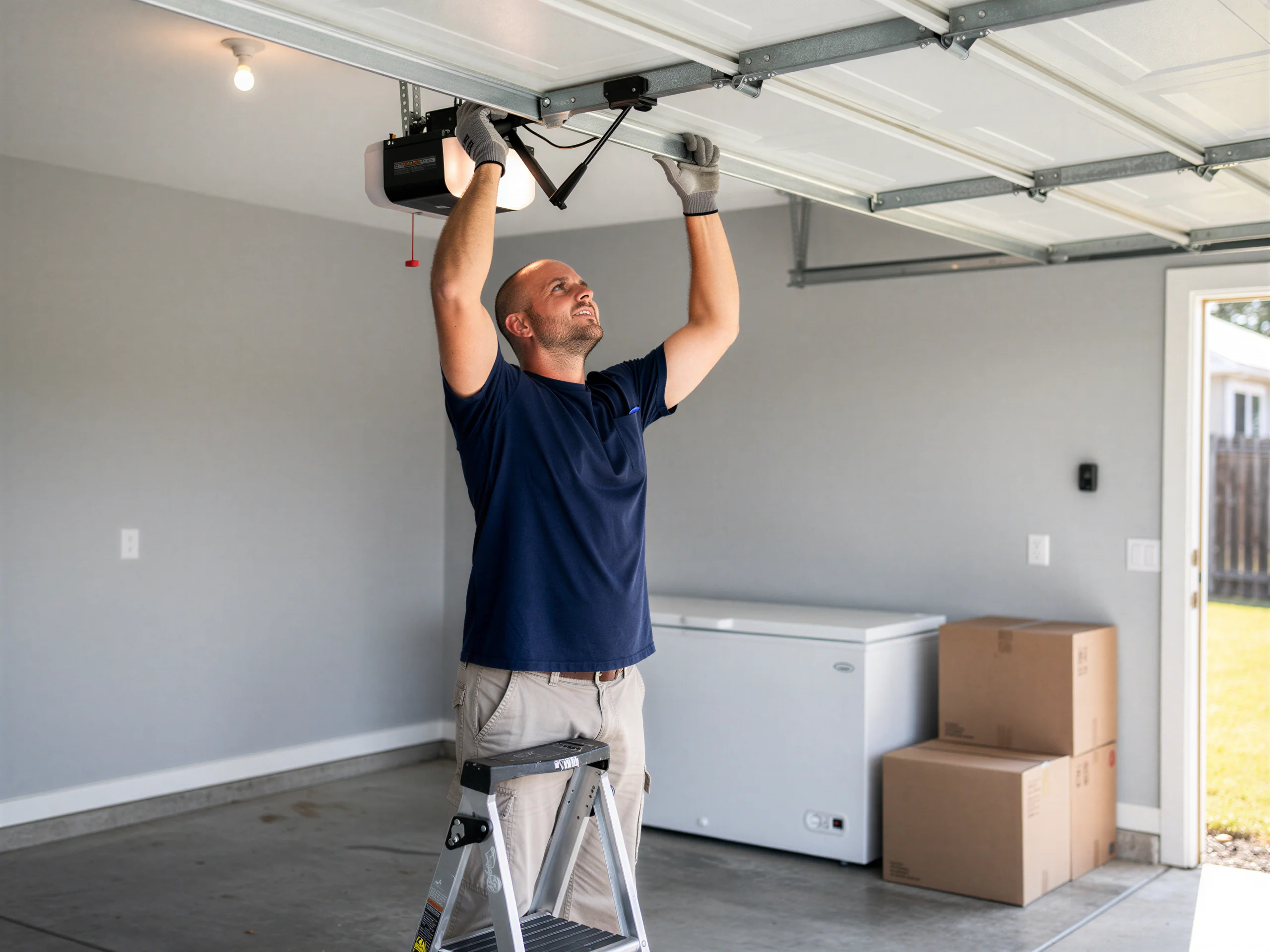
Most houses in Hacienda Heights went up around 1968, right in the middle of the wave of 1960s-70s construction that covers this part of the service area. Doors from that build era were almost always steel flush-panel or ribbed-steel sectional, hung in openings that don't always match the 8-foot and 9-foot widths that are standard today. A lot of these garages are still on their original door, or a replacement door from decades ago that was sized to fit the opening as built rather than to any current standard. When one panel on a door like this gets dented or rusted through, the fix isn't as simple as ordering a matching panel off a shelf. The section height, the hinge spacing, and sometimes the track width are all a little off from what a new door comes with, so a single-panel swap means either tracking down an older profile or accepting that the new panel won't sit flush against its neighbors. We see this pattern across the 16,498 households here more than we do in newer tracts, because the housing stock just didn't turn over the way it did in areas built after 1980.
This isn't a defect in the house. It's a mismatch between what the door needs and what the supply chain stocks.