
Specialty bracket on truck
That bracket style isn't something you grab off a shelf at a big box store. We carry it on the truck because we see it often enough in this part of the service area to stock it, not special-order it.
Lakewood, Whittier
Lakewood's garage doors mostly date to 1957, with original torsion hardware that's hard to source now. Whittier Garage Door Pros repairs it from 10 miles out.
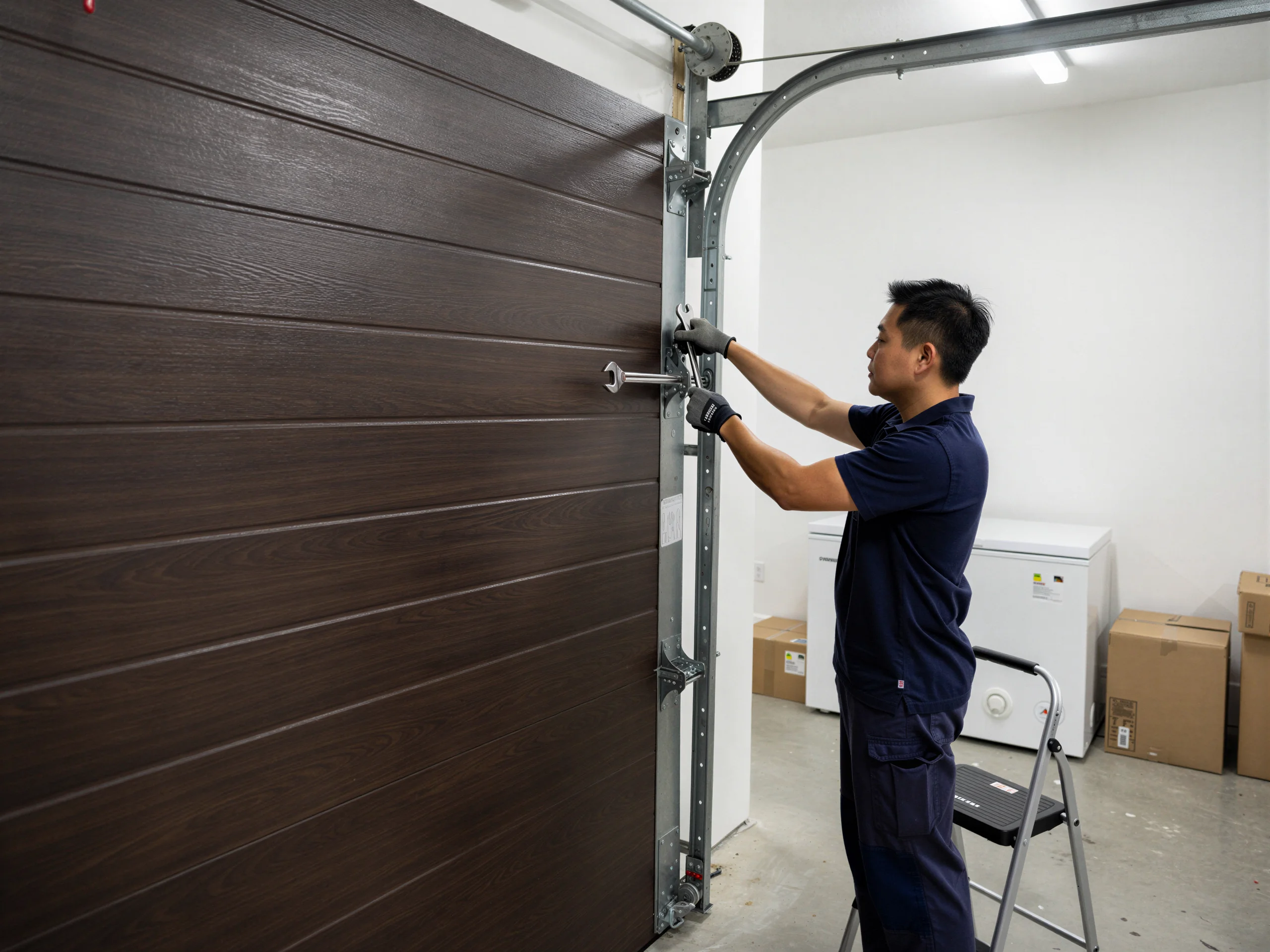
On the truck
Lakewood's housing stock centers on 1957, which means a lot of doors still running on the hardware that came standard that year: steel panel doors on torsion springs sized for low-headroom garages, with roller brackets bolted straight to the jamb rather than the reinforced track mounts you see on anything built after the 1980s.
That bracket style isn't something you grab off a shelf at a big box store. We carry it on the truck because we see it often enough in this part of the service area to stock it, not special-order it.
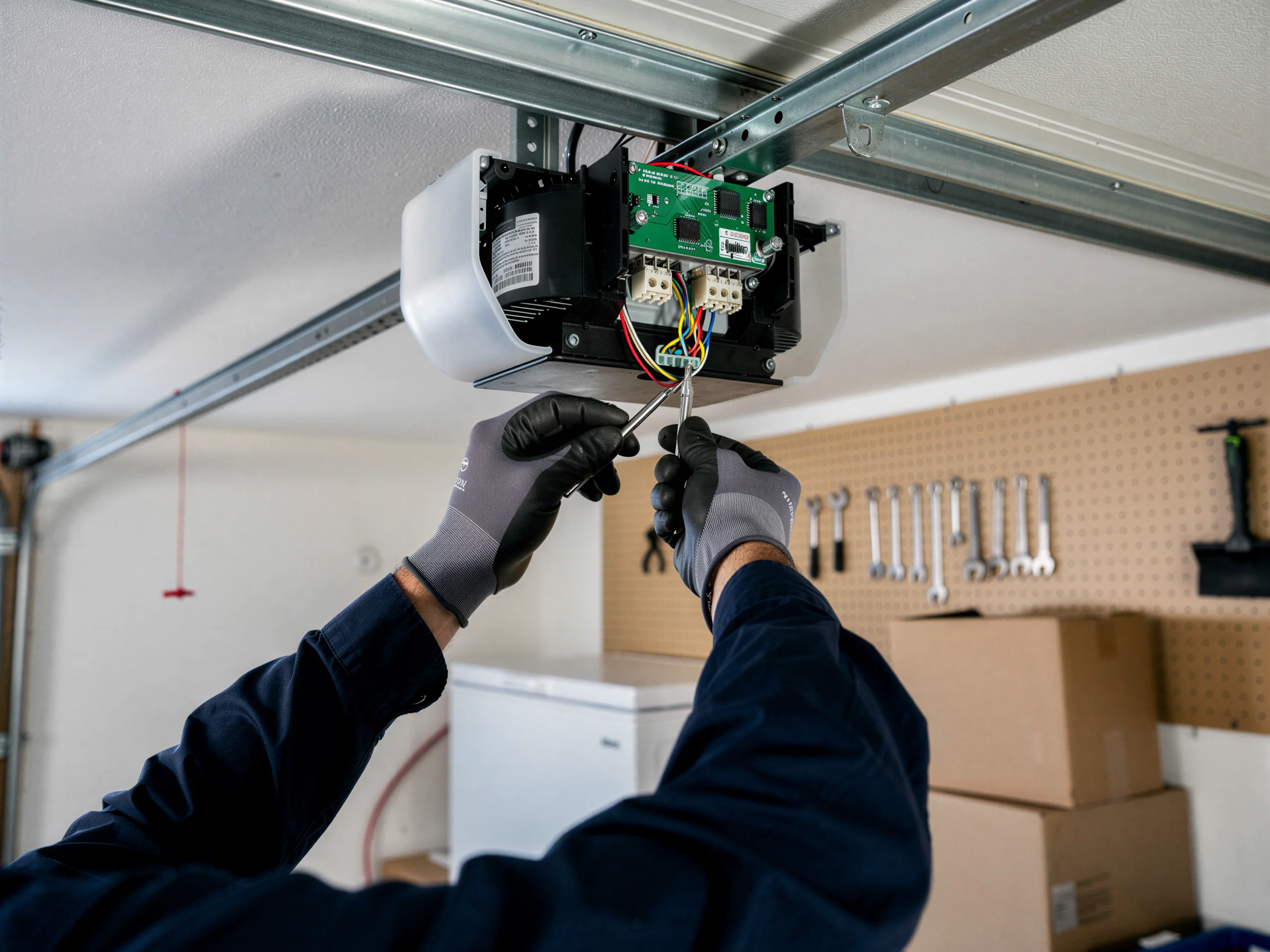
What we don't stock is every obsolete opener logic board from that era - if the opener itself is original or close to it, the circuit board sometimes has to be sourced, and that can add a day or two to a repair that would otherwise be same-visit. We tell you that up front rather than promising a part we don't have in hand.
Springs, cables, rollers, and the brackets that match 1950s framing are the parts we bring as a matter of course for a Lakewood call. It's less about brand and more about matching what's already on the door, since mixing a modern bracket onto 1957 framing usually means redrilling wood that's had sixty-plus years to harden.
The repair
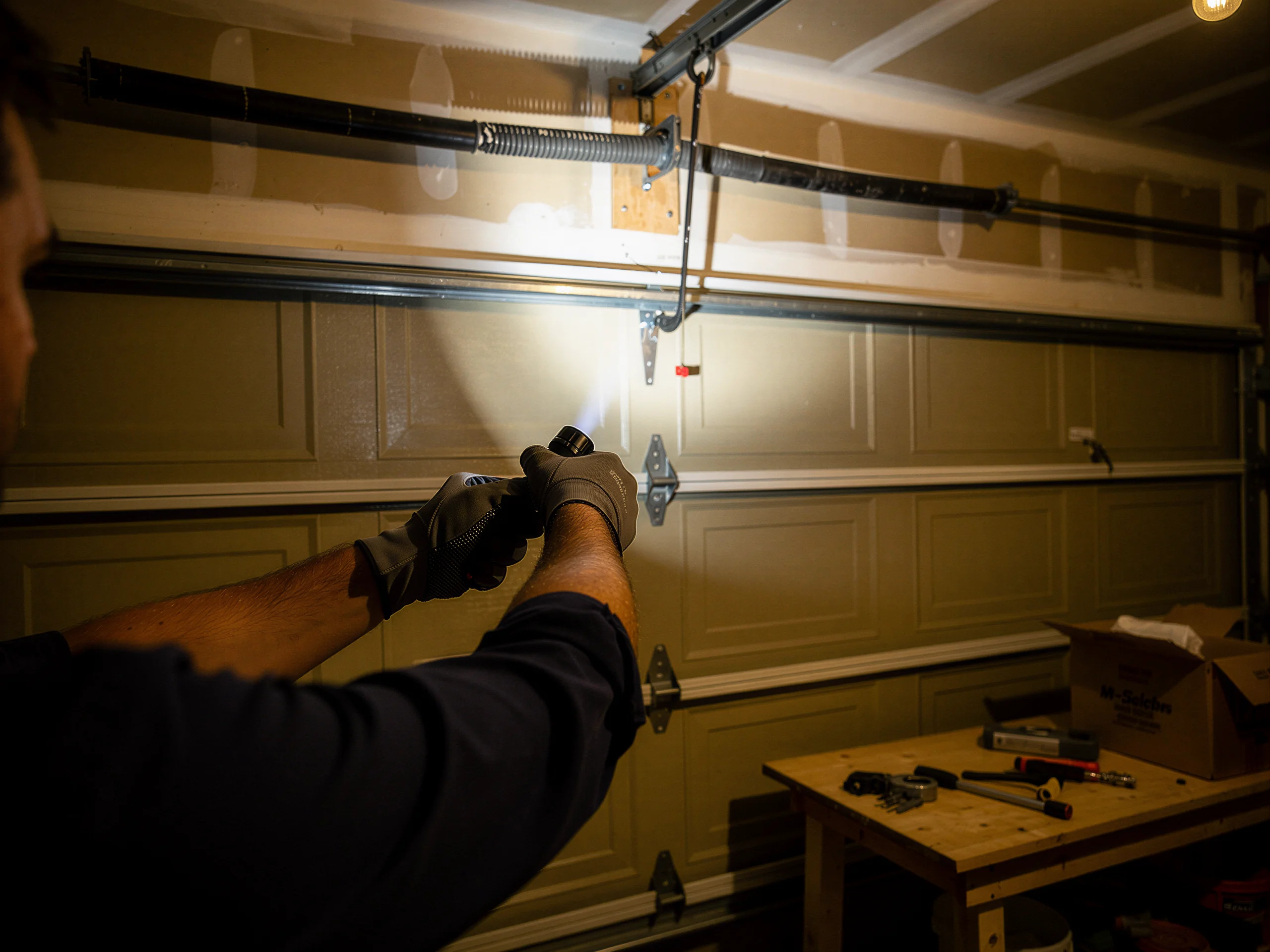
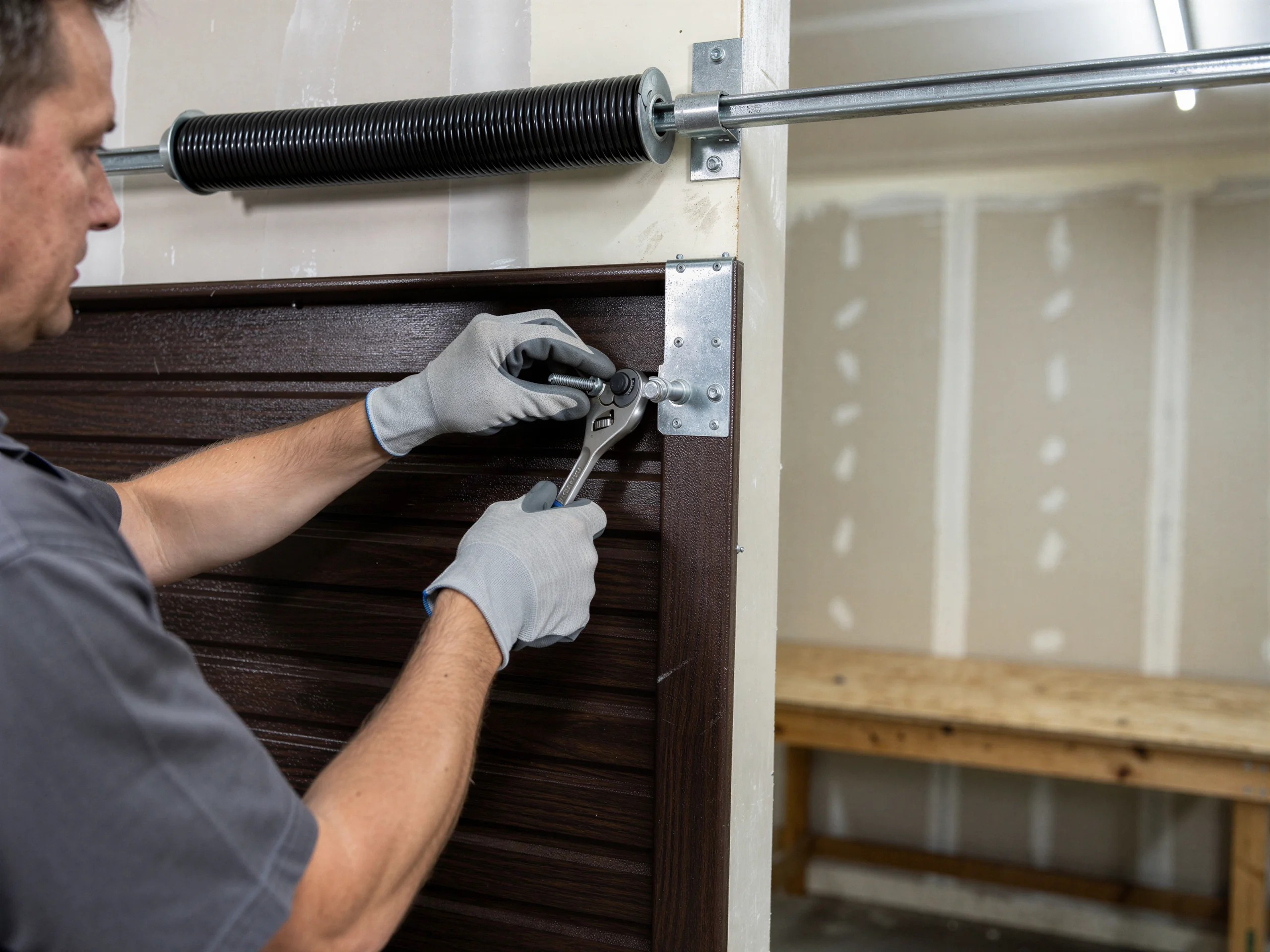
A torsion spring job on a door from this era usually starts with unwinding the old spring safely, checking the shaft and bearing plates for wear, and confirming the drum size matches the cable before anything gets reinstalled.
On a 1957-era door, we also check whether the track has been bent or re-hung over the decades - a lot of these garages have had the opener added years after the house was built, which means the track was drilled for a chain drive that wasn't part of the original design.
We travel the 10 miles out from Whittier for the call, so the repair itself - not drive time - is what the visit is built around. Most spring and roller jobs run one visit. A full opener swap on an original setup can run longer if we're correcting bracket positions the original installer didn't have to deal with.
Income and household figures for the wider service area don't change the mechanics of the repair, but they do shape what owners ask for: more owners here ask for insulated steel replacement panels that match the house rather than a bare economy panel, since this isn't a market where people are patching a door to sell fast.
DIY or pro
A torsion spring is under enough tension to break a wrist or worse if it lets go while you're working on it, and that risk doesn't change because the door is sixty-plus years old - if anything it goes up, since the spring and shaft have had decades to corrode slightly or seize.
We don't recommend DIY spring work on any door, but we'll say it plainer for 1957-era doors in Lakewood: the brackets are often not the standard size you'd find in a tutorial, and improvising a fix with hardware-store parts can leave the door looking fine while running on a mismatch that fails again in a month.
Roller replacement and basic lubrication are reasonable DIY jobs on any door. Track alignment is not - on a door this old, the track mounting points may have shifted slightly over the years, and tightening it back into a position that looks straight isn't the same as a position that's actually square to the opener.
If you're set on doing some of the work yourself, swap the rollers and leave the spring and cable system to a call. That's the honest line, not a sales pitch.
Watch-outs
The most common mistake we see on calls in this part of the service area is an opener replacement that goes in clean but doesn't fix the actual problem, because the opener wasn't what was failing - the track brackets from the original 1957 install were.
A new opener run against a misaligned or worn track just means the new motor works harder and wears out faster, sometimes within a year or two. The second pattern: a spring gets replaced with a generic size instead of one matched to the door's actual weight and drum diameter.
On an older steel panel door, the weight is often different from what current panel designs assume, and a spring that's close but not exact will either strain the opener or leave the door hard to lift by hand if the power goes out.
Both of these get caught during a proper diagnostic visit, but they're easy to miss if the repair starts and ends with swapping the obviously broken part. On a house this age, what's failing and what's broken aren't always the same thing.
Local causes
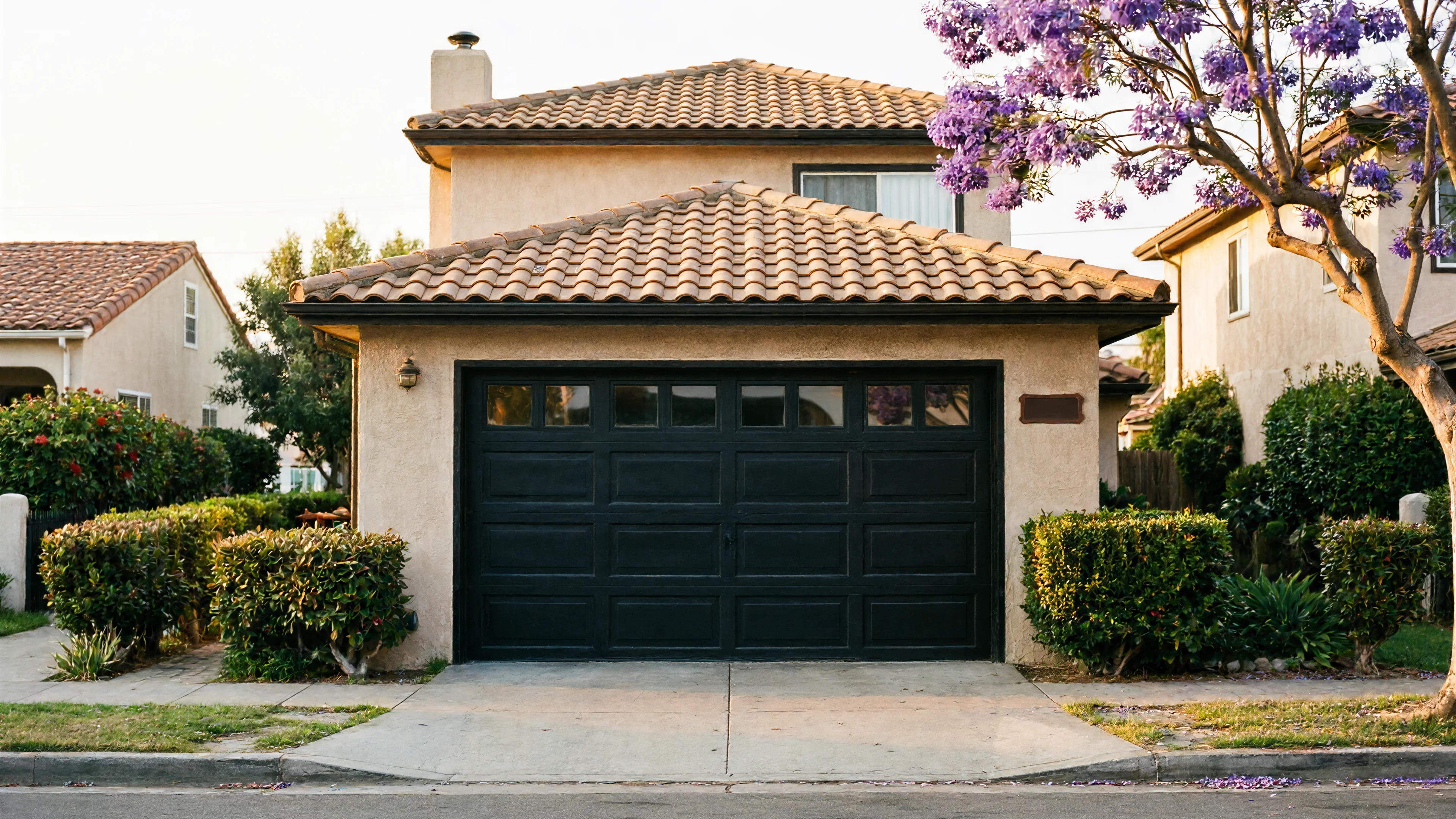
This area sits in a mild temperate climate band, so the failures we see on Lakewood doors aren't storm damage or extreme heat warping panels - they're age and cycle fatigue. A spring built in 1957, or even one replaced decades ago, has simply gone through its lifetime of open-close cycles. Without the freeze-thaw stress or heavy storm load that drives fast failure in other climates, these doors tend to fail slowly: a little more noise, a little more drag, until one day the spring lets go on an otherwise ordinary morning.
That slow failure pattern means a lot of Lakewood calls are for doors that gave warning signs for weeks before the actual break. The hardware era compounds it - brackets and track hung for a chain-drive opener added years after the house was built tend to work loose gradually rather than fail all at once.
We don't see weather-driven emergency calls the way companies covering harsher climates do. What we see instead is maintenance deferred past the point where a lubrication visit would have fixed it, on doors old enough that the parts involved aren't the ones a newer house would need.
Questions
Doors built around 1957 often used torsion springs and roller brackets sized for low-headroom garages with bracket mounts bolted directly to the jamb. Newer doors use reinforced track mounts and different drum sizes. Mixing the two means redrilling old framing or running a spring that doesn't match the door's actual weight.
About 10 miles from Whittier. There's no local branch or depot in Lakewood - the technician and the stocked parts travel from Whittier for each call.
We don't recommend it on any door, and especially not on a door this age, where the bracket sizing often isn't standard and the shaft may be slightly corroded after decades of service. Roller swaps and lubrication are fine DIY work. Spring and cable work isn't.
If the track or brackets were worn or misaligned from the original 1957 install, a new opener motor has to work against that resistance every cycle. The opener isn't the problem in that case - the track is, and it needs correcting before a new motor will last.
Explore more
Ready when you are
Whittier Garage Door Pros repairs and installs garage doors, springs and openers in Whittier, CA and the surrounding area.