
Bracket in weak framing
If the bracket goes into framing that can't hold it, the opener works for a while and then starts sagging under its own travel, which stresses the trolley and the top panel.
Lakewood, Whittier
Lakewood's 1957-era garages were framed for a shorter rail and a different header than what's standard now. We size the opener to the house, not the catalog.
On the truck
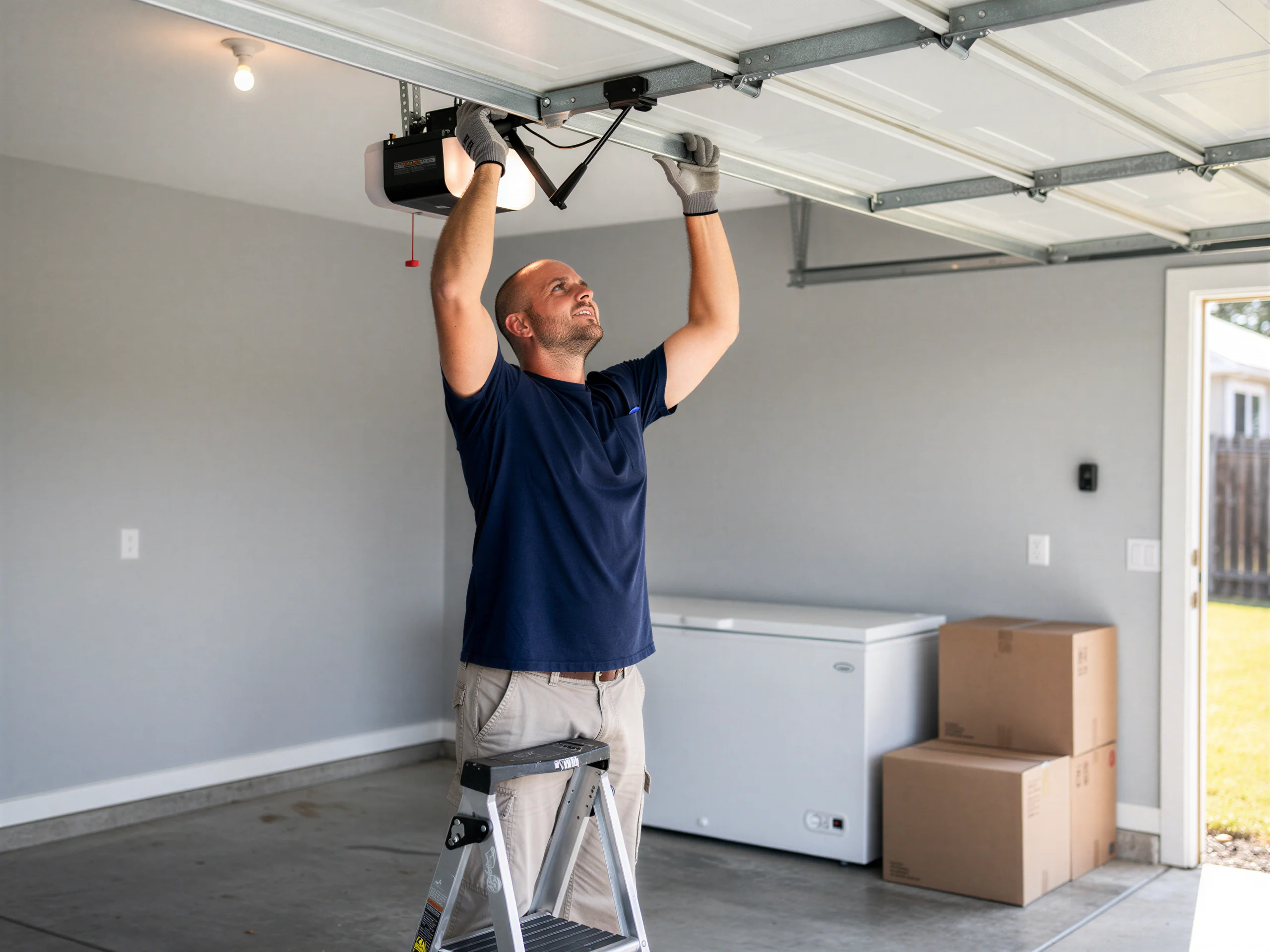
Lakewood's housing mostly went up in 1957, which puts it a few years ahead of the broader area median of 1964. That earlier build date matters for openers because garages from this run were framed with lower header clearance and shorter truss spans than what became standard by the mid-60s. We carry both 7-foot and 8-foot rail kits on the truck specifically because Lakewood jobs split between the two more than newer tracts do. We also stock the bracket hardware that a 1957 header usually needs - the original framing rarely has backing sized for a modern opener mount, so we bring lag shields and a backer plate as a matter of course rather than hoping the stud lines up. What we don't carry is every obscure chain-drive model still bolted into some of these garages from a prior remodel. If yours is a brand we don't stock parts for, we'll tell you that on the estimate, not after we've opened the box.{line}Mild temperate conditions here mean we're not building in extra insulation or cold-weather lubrication into the install, which keeps the job simpler than it would be somewhere with real winter.
The repair
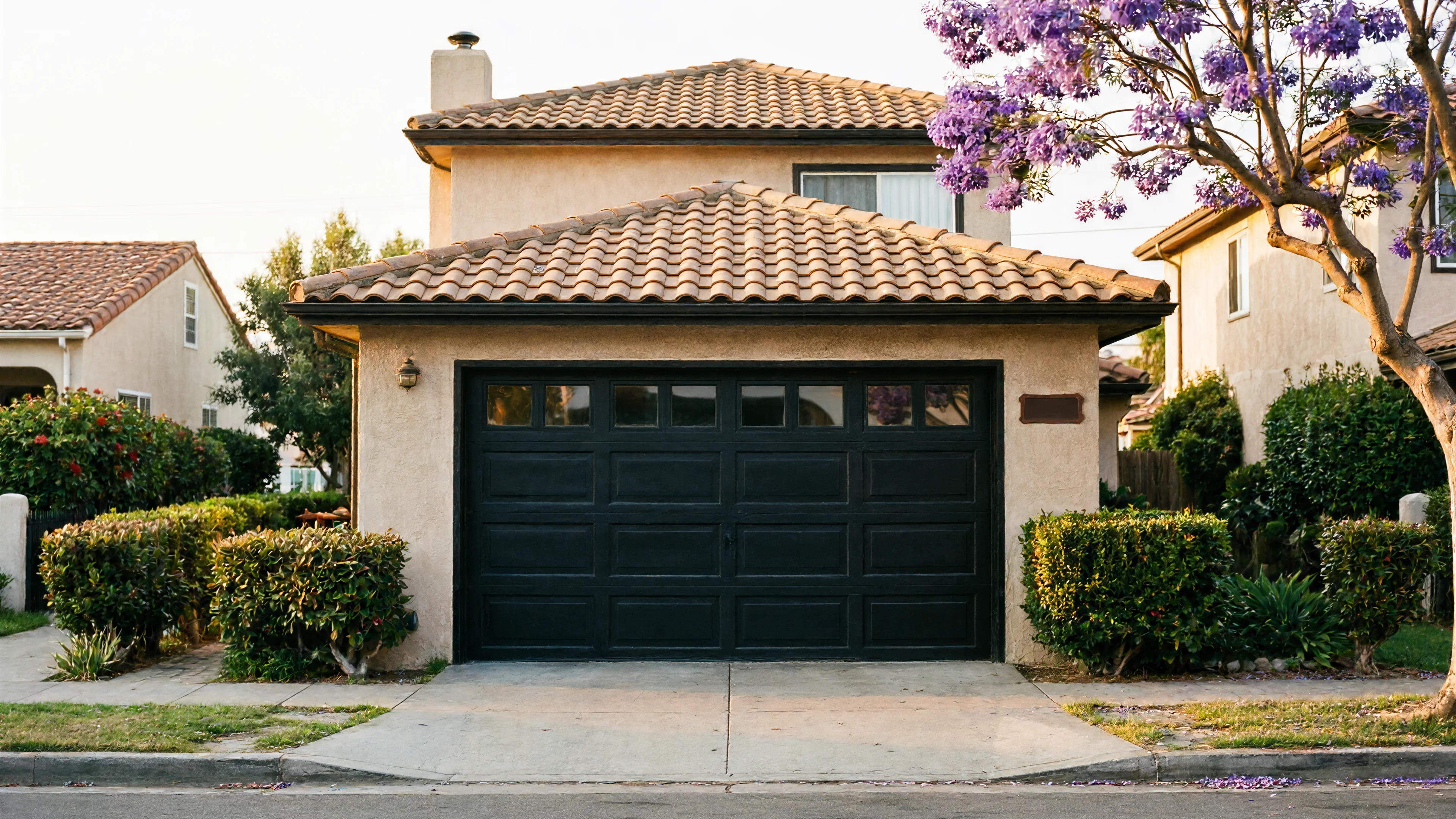
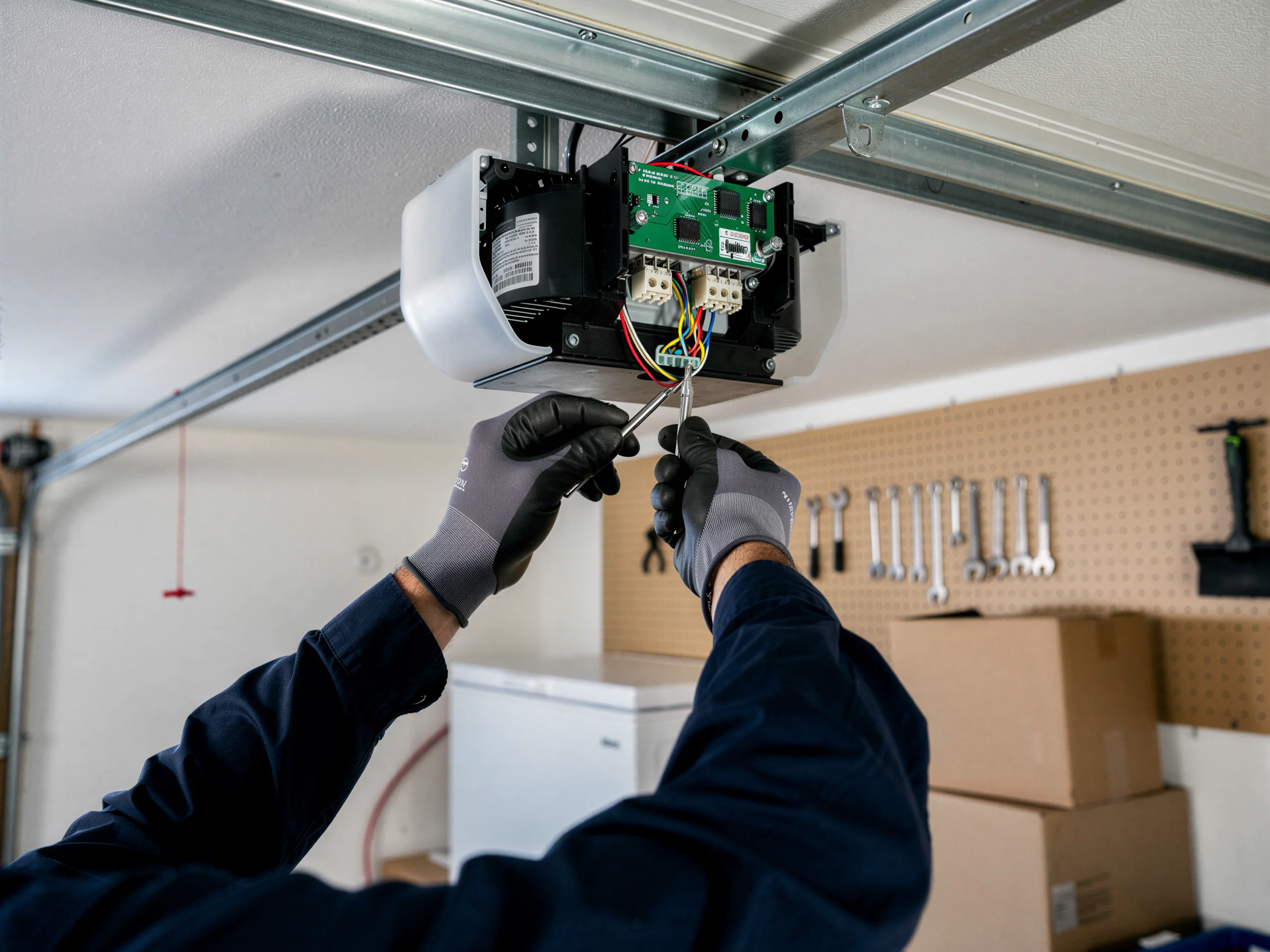
Installing an opener in a Lakewood garage starts with the header, not the opener. On a house built in 1957, we check whether the framing above the door can take a mounting bracket without extra blocking - a lot of them can't, and that's a 20-minute detour before the opener goes in.
Next is rail length: measuring the actual ceiling track run rather than assuming a standard 7-foot kit fits, since plenty of these garages were built shallower than later construction.
Wiring is usually the next snag - many 1957 garages have no interior outlet near the header, so the opener needs a new run or a battery-backup unit instead of a hardwired tie-in. Once the rail, bracket, and power are sorted, mounting the unit and setting the travel limits is the fast part.
Total time on-site runs longer here than on a newer garage simply because the header and wiring steps take more sorting out. We size the opener's horsepower to the door weight we find on-site, not to whatever the old opener happened to be.
DIY or pro
A kit from a home store assumes a modern header with backing already in place and an outlet within reach of the unit. On a 1957 Lakewood garage, neither is a safe assumption.
If the bracket goes into framing that can't hold it, the opener works for a while and then starts sagging under its own travel, which stresses the trolley and the top panel.
The outlet problem trips up more DIY installs than people expect - running new wire to the header isn't part of the kit instructions, and extension cords aren't a fix anyone should live with long-term. If your garage already has a solid header and a nearby outlet, a straightforward swap of like-for-like opener models is a reasonable weekend job.
We're not going to pretend otherwise. Where we'd stop you is matching horsepower to door weight - guessing wrong there either burns out the motor early or leaves you with an opener that strains on every cycle.
Watch-outs
The most common failure we see in Lakewood installs is a rail cut or extended to fit a ceiling run that wasn't measured first, leaving slack in the chain or belt that shows up as a bang at the top of every cycle.
Second is the bracket mounted into drywall or thin trim instead of the header itself - it holds for a few weeks, then pulls loose under full extension.
Third is reusing the old wall button and sensor wiring without checking it, which works until it doesn't, usually during a cold snap or a surge, and then the opener won't respond at all.
None of these are expensive fixes if caught early, but each one gets harder to diagnose once the opener's been running for months and the real cause is buried behind a working-but-wrong installation. We check all three before we call a job done.
Local causes
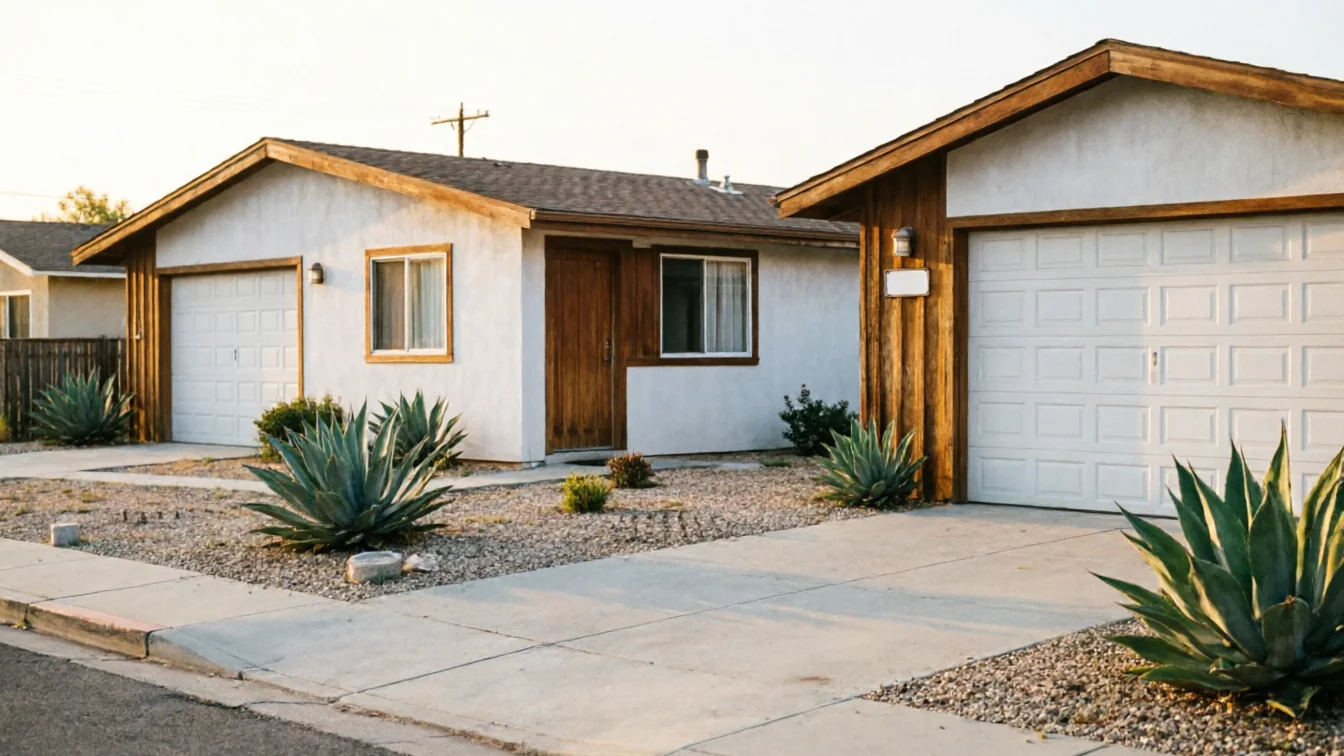
The reason opener installs go wrong more often in Lakewood than in newer tracts comes down to the 1957 framing itself. Builders that year weren't planning for electric openers - garages were framed for a swing-up or basic panel door with no expectation of a motor, rail, or bracket load overhead. That means the header, the stud spacing, and the available power all need checking rather than assuming, where a garage built in the 1970s or later usually has all three already sorted. At 10 miles out from our Whittier shop, we plan the opener model, rail length, and bracket hardware before the truck leaves, because showing up without the right parts for a 1957 header means a second trip. With a median household income of $116,794, we also see more requests here for quieter belt-drive units over the cheaper chain-drive option - worth knowing before you call, since it changes which unit we load.
Questions
Maybe, but check the rail length before you buy. A lot of 1957-era garages here are shallower than what a standard 7-foot kit assumes, and the header may not have backing for the mounting bracket without extra work. We measure both before quoting.
For common brands, yes. For some older chain-drive models from past remodels, we may not stock a direct match and will say so upfront rather than ordering parts after the job has started.
Often not, on houses from this era. Many 1957 garages were wired without power near the door header, which means the install may need a new wire run or a battery-backup opener instead of a straight plug-in.
About 10 miles from our Whittier location. We plan the opener model and rail length before heading out so we're not making a second trip for the wrong part.
Explore more
Ready when you are
Whittier Garage Door Pros repairs and installs garage doors, springs and openers in Whittier, CA and the surrounding area.