
Narrow frame smaller track
That narrower frame matters for how long a repair takes, because the hardware is often a smaller-gauge track than what a tech carries as the default stock size.
South El Monte, Whittier
South El Monte homes went up around 1959, mostly single-car openings on steel or early aluminum doors. We service these from Whittier, 6 miles out. See what the job actually involves.
Job timing
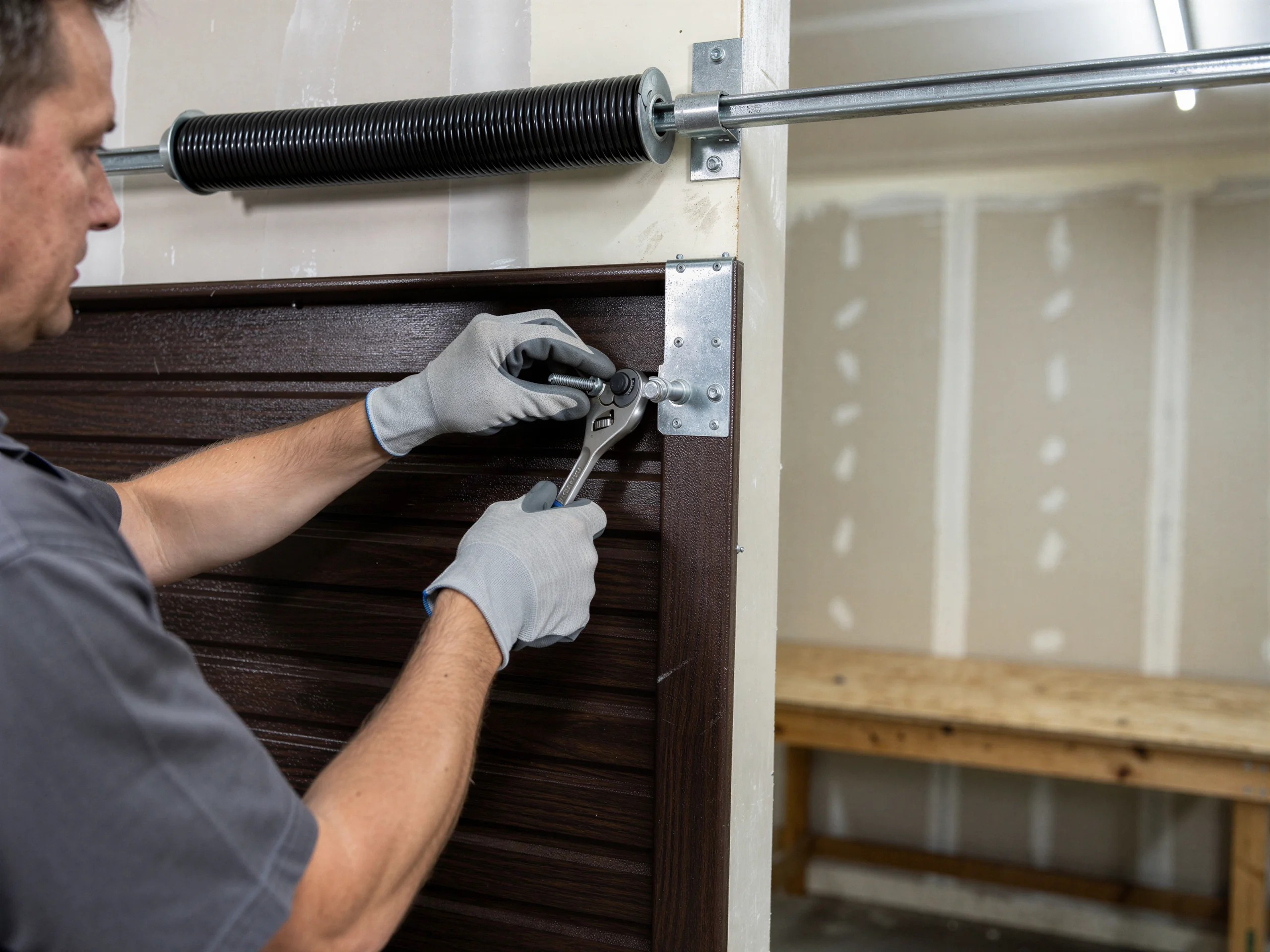
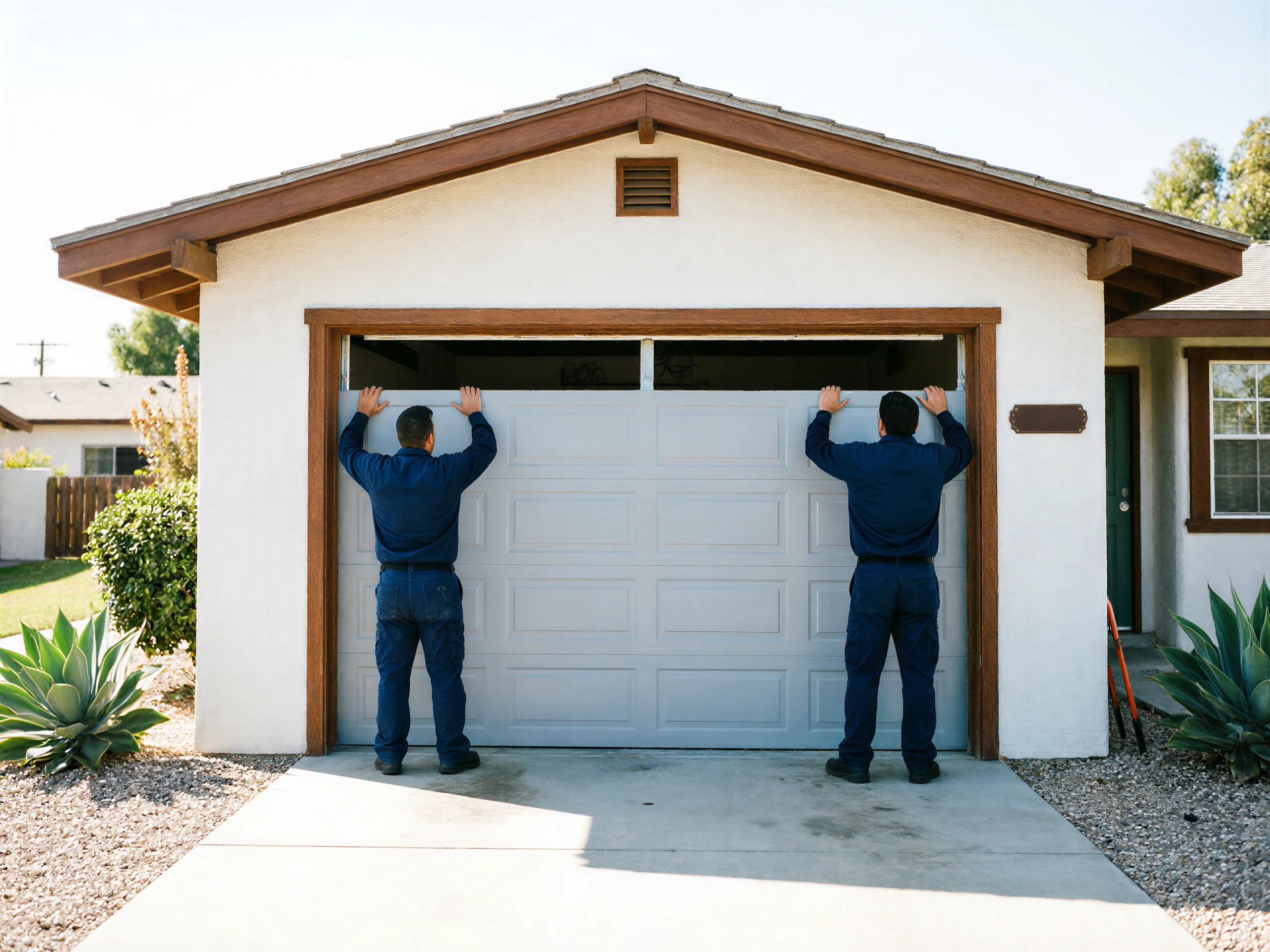
A single-car garage door built around the median year here, 1959, usually has a narrower opening than what you'd find in a house built a decade or two later.
That narrower frame matters for how long a repair takes, because the hardware is often a smaller-gauge track than what a tech carries as the default stock size.
A spring swap on one of these doors runs quicker than on a double door simply because there's less door to lift, but if the track has been reset or shimmed over the years by a prior owner, squaring it back up adds time nobody budgets for.
We don't promise a number of minutes here, because every one of these garages has its own history of patchwork fixes, and guessing at it before we've opened the panel would be dishonest.Expect a tech to walk the full door, hinges to bottom bracket, before touching the spring, since on a door this age that's usually where the real problem is hiding, not where the symptom shows up.
The repair
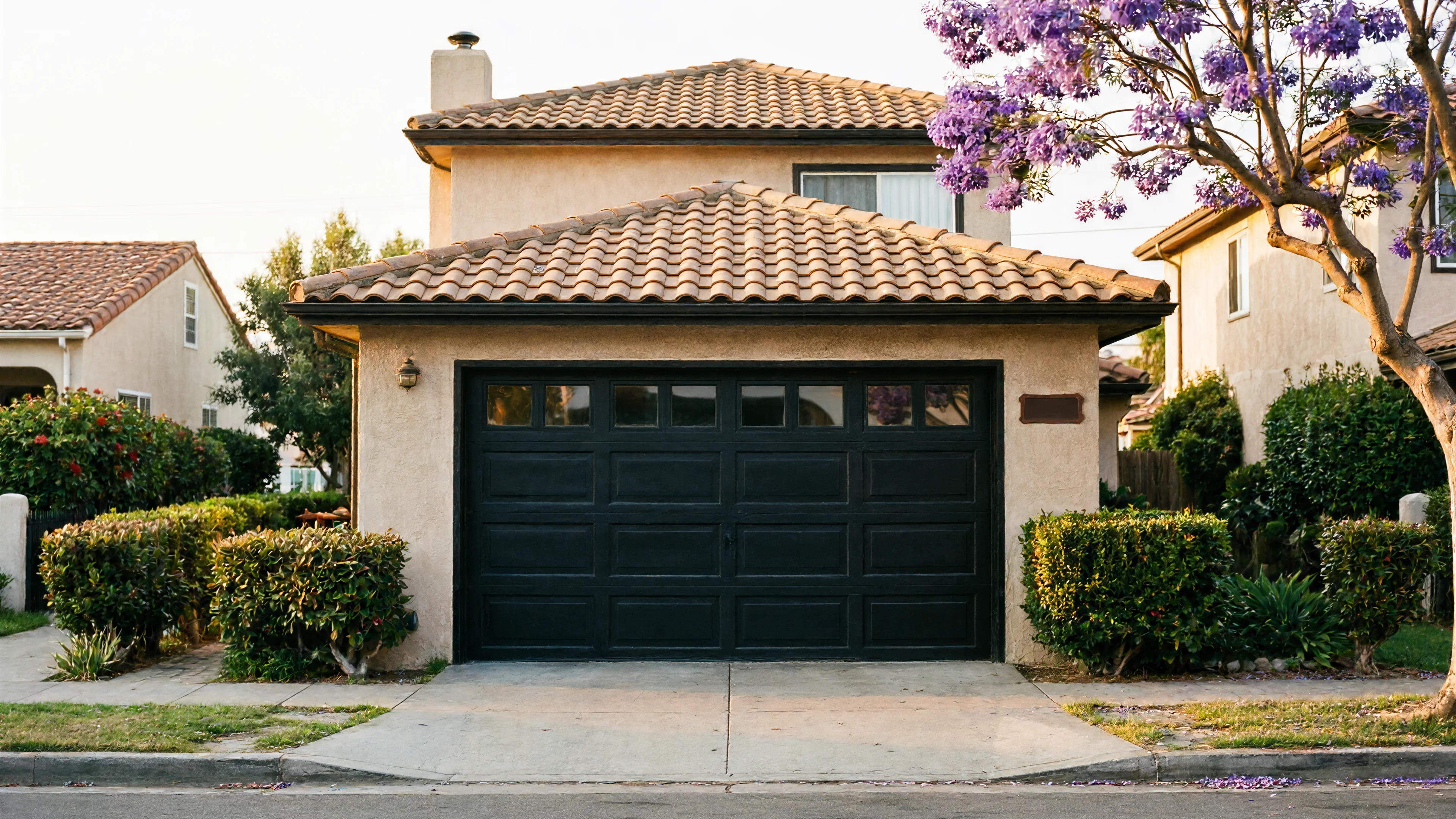
Doors from the late 1950s in this part of the service area tend to be steel panel over a wood or light steel frame, single layer, no insulation core, mounted on extension or early torsion hardware depending on which contractor put it in.
That's a different animal from the torsion-spring, insulated steel doors that came standard once building codes updated in later decades. Repairing one means matching spring wind to a lighter door weight, not assuming the mid-weight spec most trucks stock by default.
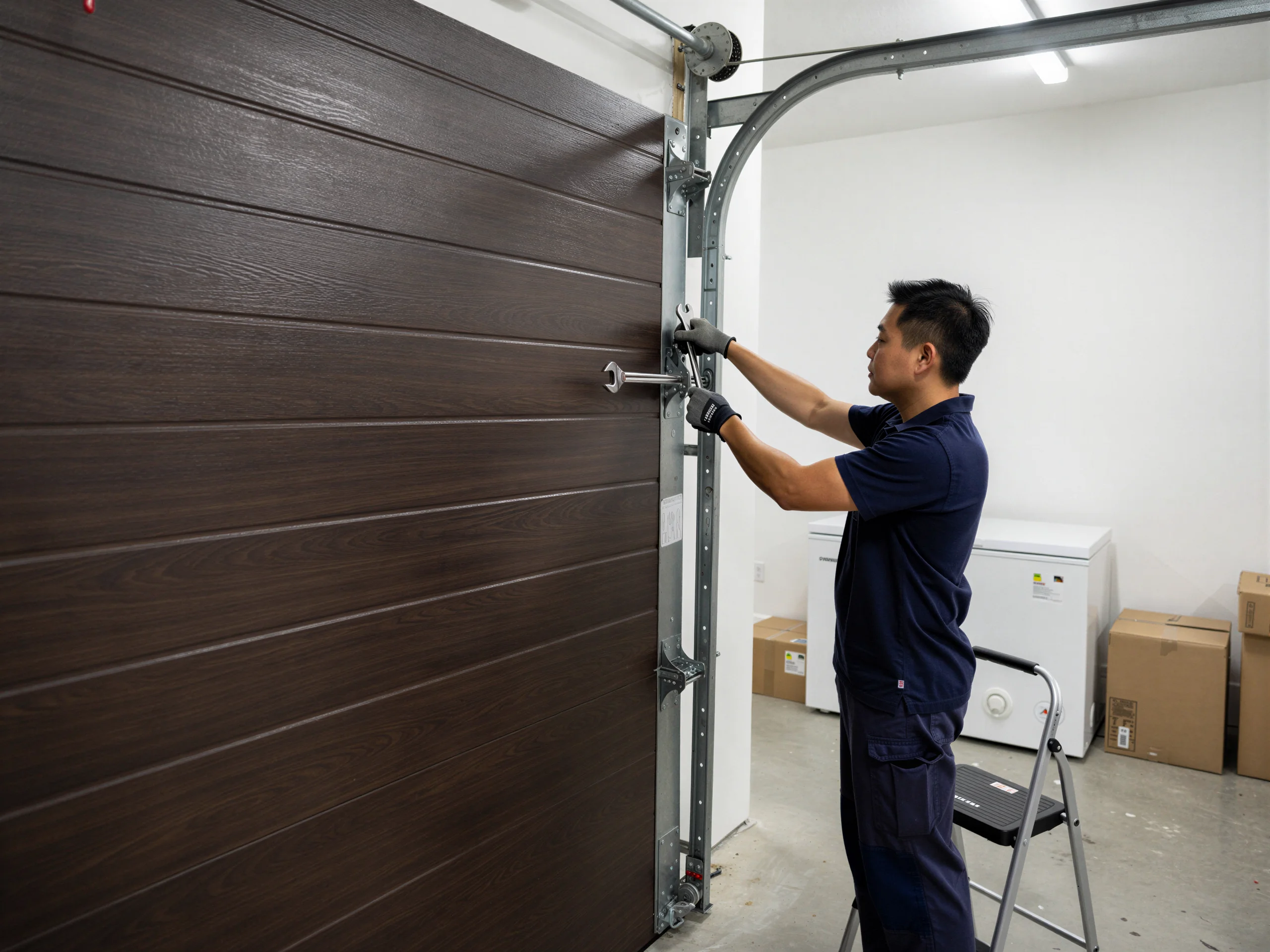
The track brackets on these are also often lag-bolted directly into old jamb wood rather than a modern jamb plate, so a tech checks that wood before trusting any new hardware to it.
If the jamb has softened with age, that's a carpentry problem before it's a garage door problem, and we'll say so rather than bolt new hardware into wood that won't hold it.
Symptoms
The complaint we hear most from houses this age is a door that reverses halfway up, or one that needs a shove to get moving. On a 1959-built single-car opening, that's rarely the opener's fault first - it's usually a spring that was sized for a lighter original door and never resized after a heavier replacement door went in at some point over the decades. South El Monte's mild climate (no deep freeze, no major humidity swings) means the metal itself isn't the main culprit the way it would be somewhere with harsher winters; the wear here comes from age and cycle count, not weather damage. A door that's been cycled daily since the Eisenhower era has simply used up its spring life, whatever the weather did to it.
Pricing
South El Monte's median household income, $67,153, runs below the wider service area's $96,234, and that shows up in which jobs homeowners here choose: more spring and track repairs, fewer full door replacements, compared to some of the newer-stock areas we also cover.
With about 5,050 households in town, most on older single-car openings, a repair that keeps the original door running another decade is often the more sensible call than swapping it for a new insulated unit, and we'll tell you when that's true rather than push a replacement.
That said, if the door's steel has rusted through at the bottom panel or the track is bent past re-alignment, no repair makes that door safe long-term, and we say so instead of billing for a fix that won't hold.
On the truck
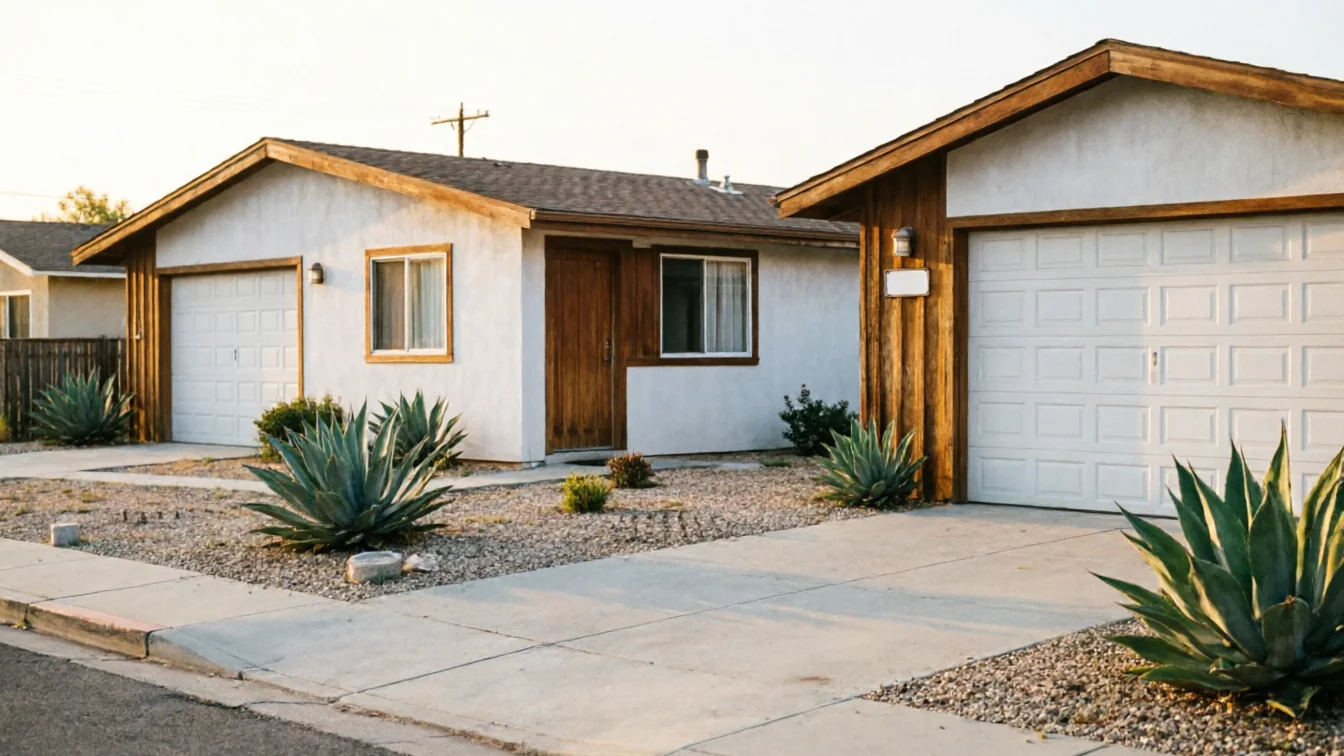
We run the truck from Whittier, 6 miles from South El Monte, and we stock springs and rollers across the size range that covers both the 1960s-70s stock common through most of this service area and the lighter-duty hardware that shows up on older single-car doors like the ones built here around 1959. What we don't carry on the truck is replacement wood jamb stock or custom-length track for openings that have been altered from their original size - those get measured on site and ordered, which means a second visit on some jobs. That's the one honest limit worth stating up front: a straightforward spring or roller job we handle same trip, but a door with non-standard jamb or track work waits on a part.
Questions
On older single-car doors like the ones common in South El Monte, that's almost always a spring that's lost tension, not the opener motor. The opener is doing extra work to compensate, which is also why it sounds strained. A spring resized to the door's actual weight usually fixes it.
Depends on the steel. If the panel and track are sound and it's just spring or roller wear, repair is usually the cheaper and faster path, especially on a single-car opening. If the bottom panel has rusted through or the frame's warped, repair won't hold and replacement is the honest answer.
No. We run out of Whittier, about 6 miles away, and cover South El Monte from there. There's no local branch or drop-in counter here, just the truck coming out for the job.
Not really. The mild temperate climate here doesn't put the metal through the freeze-thaw or heavy humidity swings that age hardware faster elsewhere. Wear on doors this age comes mostly from decades of daily cycles, not weather.
Explore more
Ready when you are
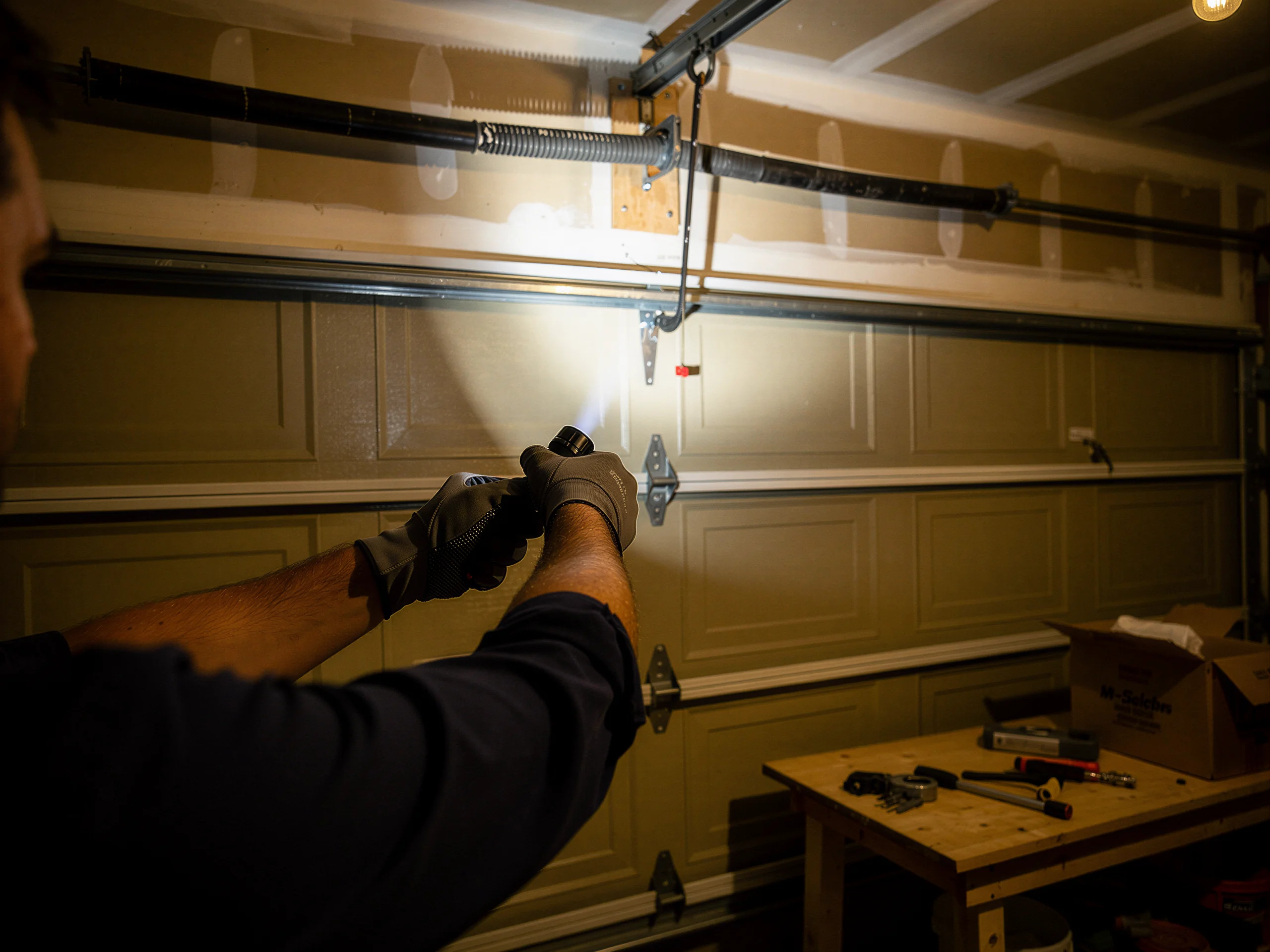
Whittier Garage Door Pros repairs and installs garage doors, springs and openers in Whittier, CA and the surrounding area.